Supporting Plants Indoors & How To Train Them to Grow
We love our plants and want them to grow. Then, somewhere down the line, they grow, trail, flop, and get a little wild. Now what? Training and supporting plants is part of indoor gardening, and I want to share what I’ve learned over the years to help you get a little more control over your indoor jungle.
If your plant is leaning, flopping out of its pot, or has unstable stems, it’s time to support and train it. Different plants need different types of support. I’ll share what I’ve done with my own plants, along with other ideas you can try, and things good to know.
A Guide To Training & Supporting Plants Indoors
Why Houseplants Need Support
They grow! Obvious aside, many indoor plants climb in their native habitats, clinging to trees and reaching for sunlight above the canopy. They also trail along the ground or climb over nearby plants.
Without support, a plant’s growth can be limited. When trailing or climbing plants are given something to grow on, they can produce larger leaves and stronger stems. Ficus and Dracaenas can develop stronger trunks, become more balanced, and have better form.
Without support, stems can become thin and weak as they try to hold heavy leaves horizontally. Plants can also become leggy as they stretch toward the light.
How I’ve Trained My Houseplants
I’m going to talk about the type of support I used and which plants I used it on. I’m including a few photos in this post, but it’s best to watch the video (it’ll be coming soon!) to see all these methods.
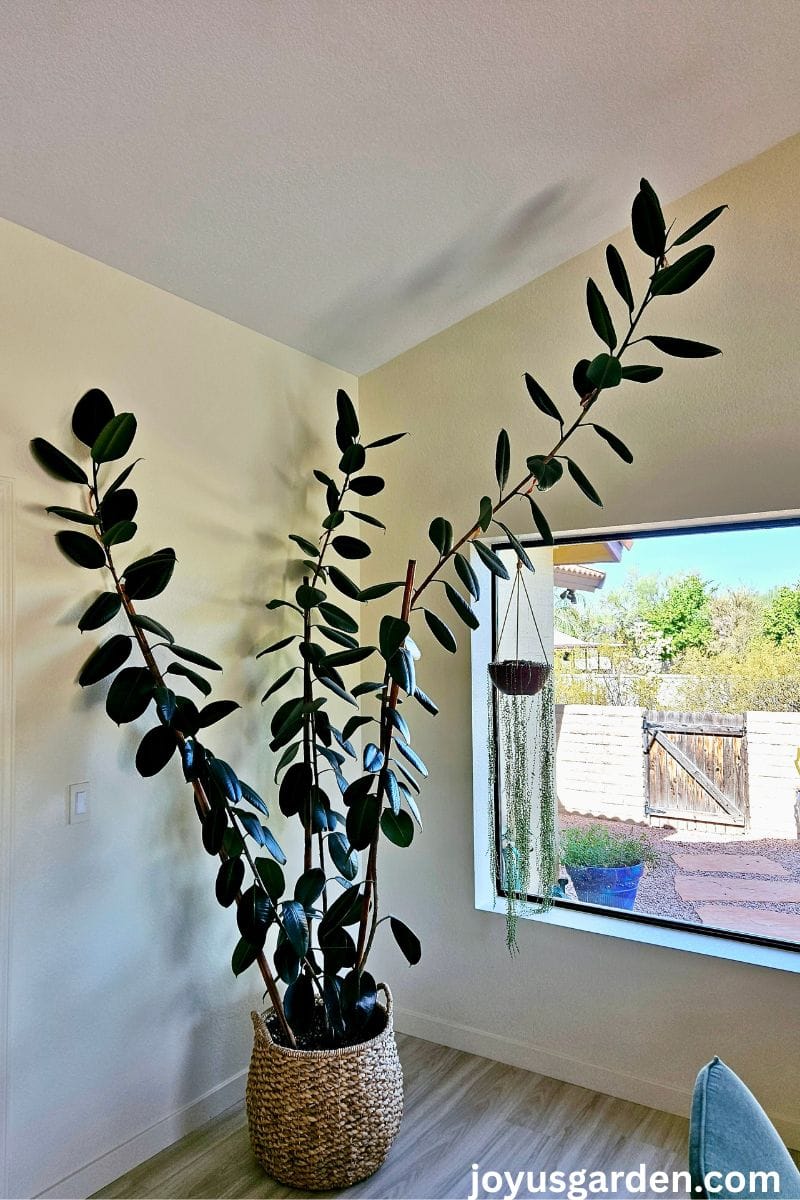
- Small, single bamboo poles for my Pencil Cactus, Dracaena ‘Lemon Lime’, Song of India, cacti, and a couple of Snake Plants. I live in a dry climate—the Arizona desert—so a moss pole would dry out in no time. I pruned my Monstera a few years ago and propagated it, so now I have two. One is staked, and the other is behaving itself, so far! My 9′ Rubber Plant is staked with larger black bamboo poles.
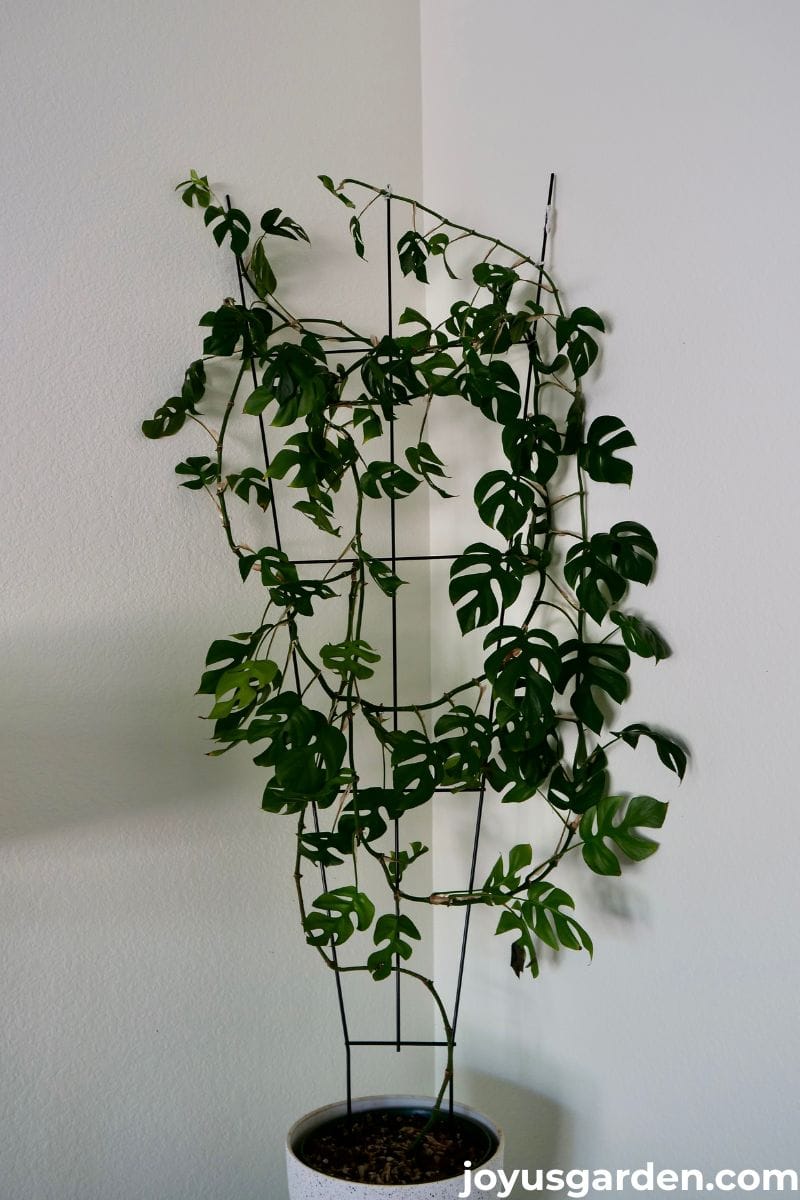
- Bamboo hoops. I had a 4′ bamboo hoop supporting my Monstera minima, but recently switched over to a 6′ metal trellis because it’s gone a little crazy.
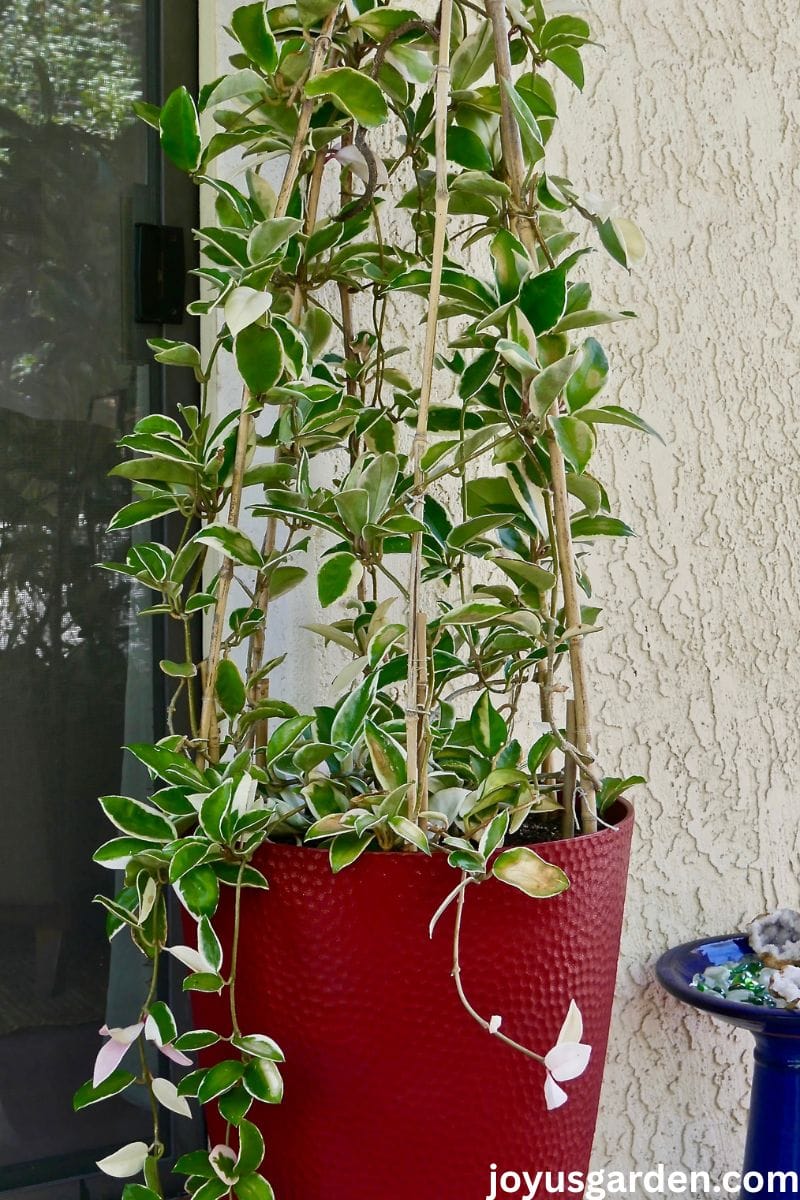
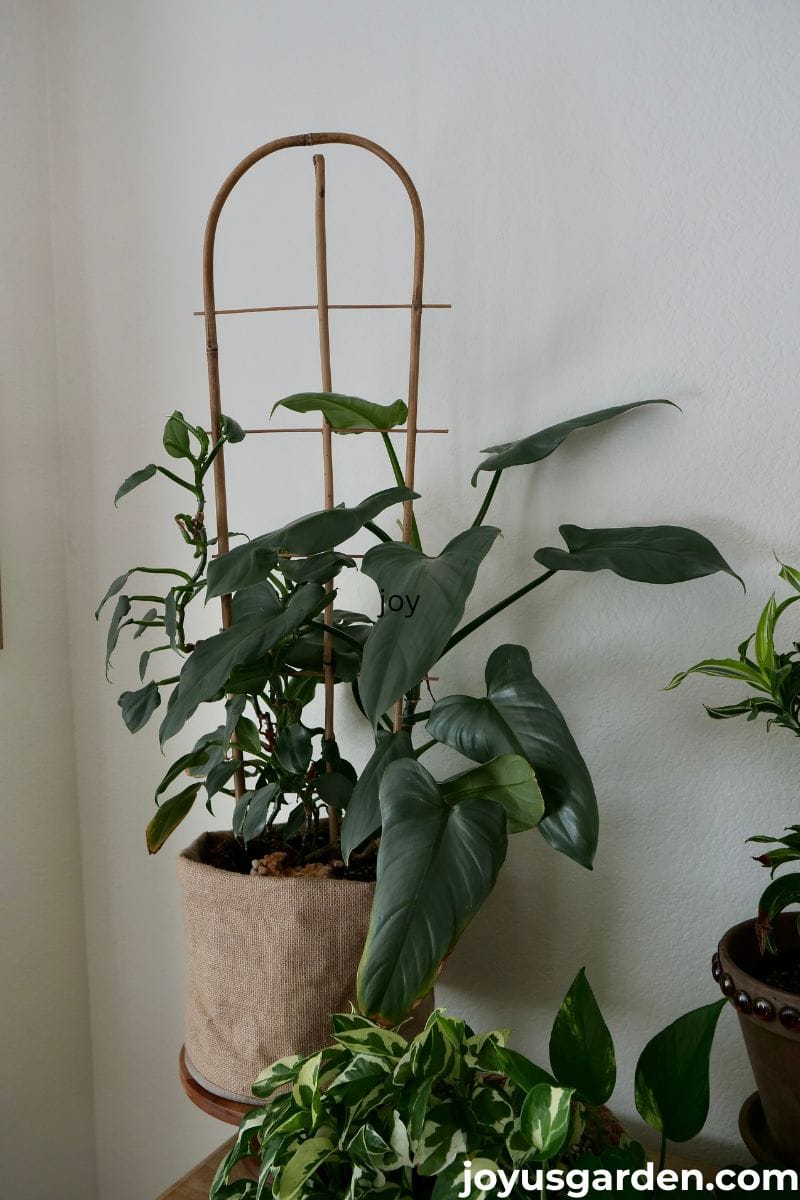
- Trellises. I used a single bamboo trellis for my Philodendron Silver Sword and three to create a triangular support for my Silver Dollar Vine. I recently got a 5′ metal fan trellis for my Monstera minima.
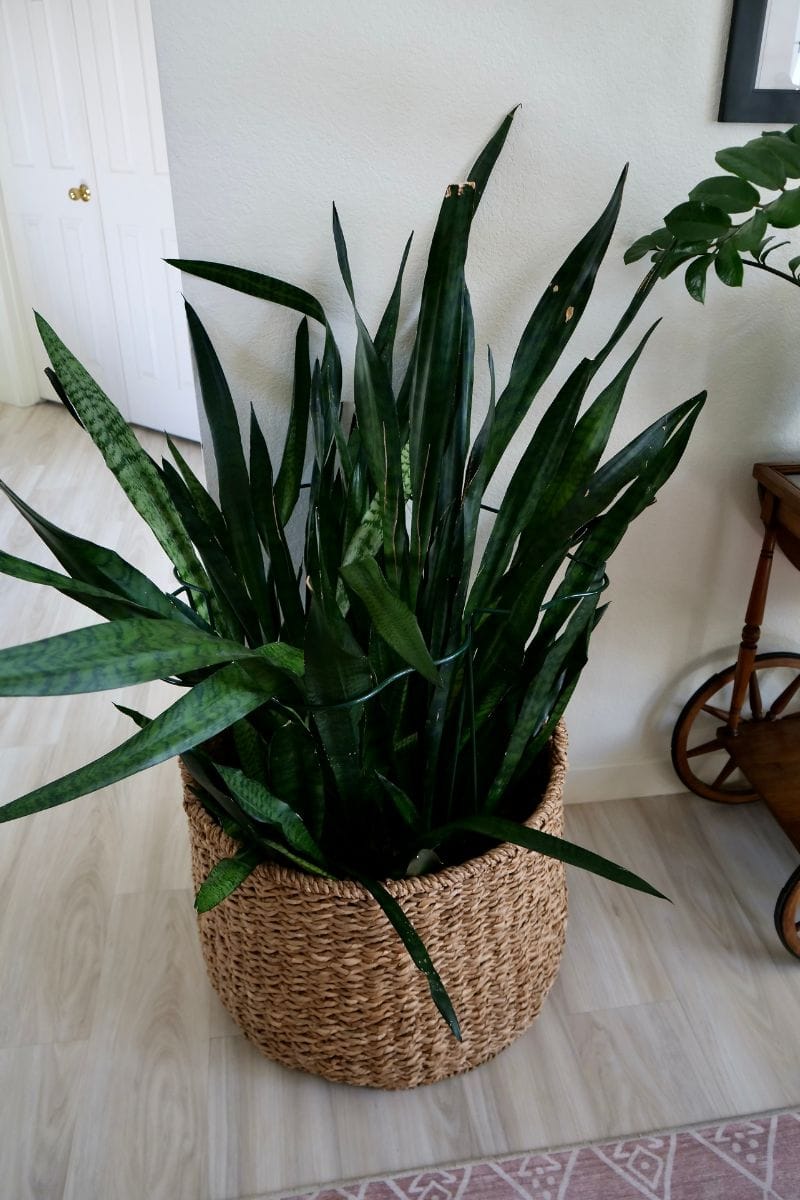
- Plant support cradle (hoops, half rounds). My Arrowhead Plant and two of my larger Snake Plants were flopping and spilling out. These supports hold up large sections of bushy plants that are leaning, keeping them more upright without having to tie up every stem.
- Fishing line. This support holds up Dracaena Lisa canes that have bent and twisted. I’ve tied floppy stems to stronger, sturdier stems to help keep them upright. I’ve been working with fishing line for years and know how to use it without tying it too tight. If you’re new to gardening, consider using something softer, such as plant ties, jute twine, or plant clips.
- The decorative pot. I sink the grow pot into the decorative container, and the sides hold the plant upright. I did this with my Arrowhead Plant, one of my Snake Plants, along with one of my ZZ Plants.
- Rocks. For smaller plants with a leaning stem or two, this is a good trick. I have a large rock at the base of one of my 9′ Rubber Plant stems to help keep the stake firmly in place.
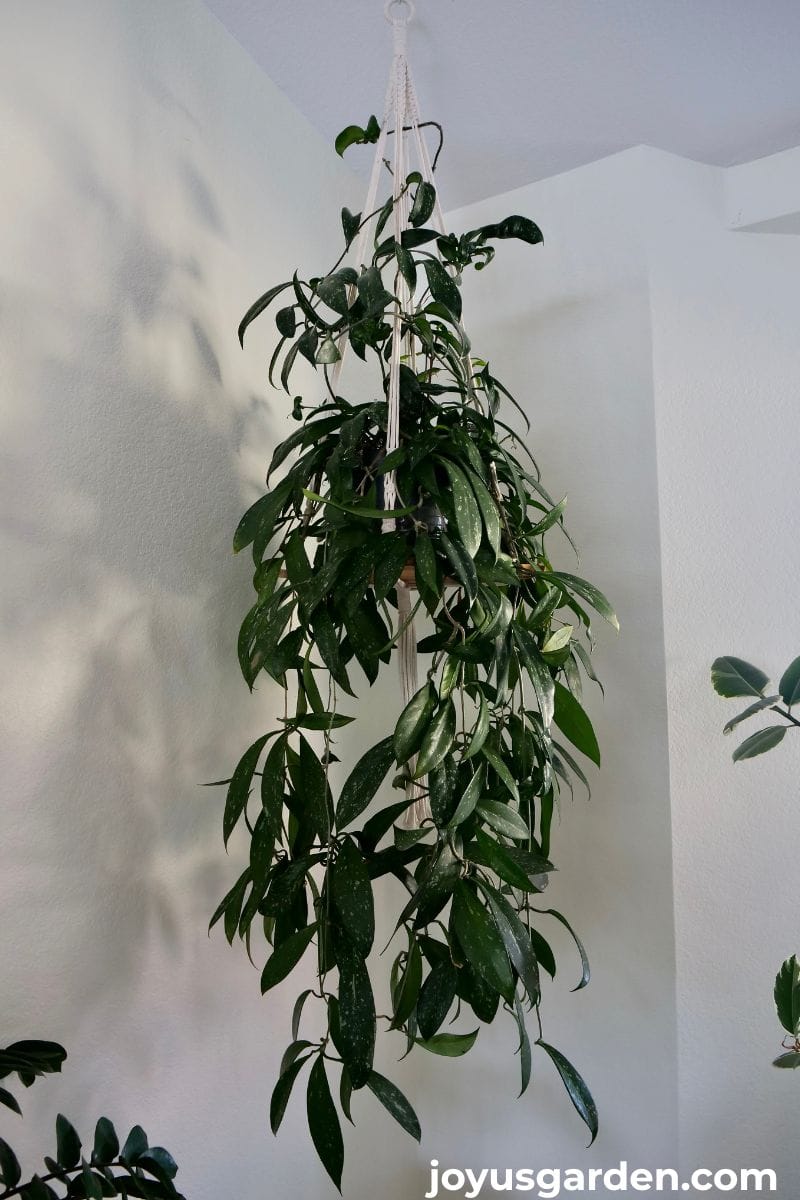
- Hanging containers/shelves. My Philodendron Brasil, Philodendron Silver Stripe, and Hoya pubicalyx are growing on hanging plant shelves. I’ve trained a few of the vines to grow up and around the macrame hangers, rather than having them all trail downward. This is an easy way to guide trailing plants upward while adding a little more interest to your display.
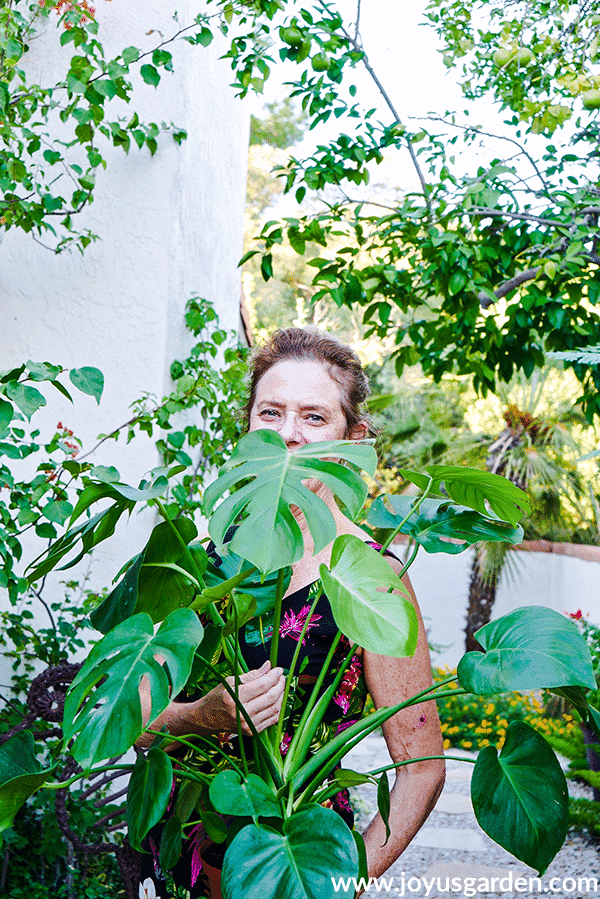
- Pruning. This is a support method when vines or stems get too long or too heavy. A plant may not need an actual support; sometimes a quick prune is all it needs. One of my Monstera minima stems was growing across the bed frame, so I pruned it off. I’m propagating the cutting and planting it back into the pot to grow up a trellis. My Monstera deliciosa was growing like crazy, and I didn’t want to train it to grow up. I pruned and propagated a portion of it, and now I have two plants, which I’m pruning to keep them under control. So far, so good!
Types Of Supports
Match the right support to your plant type. Choose a support method that works with its natural growth pattern, and adjust it as your plant grows. Work with the plant, not against it, and it will reward you with stronger stems and bigger leaves! There are many support methods out there – browse your local nurseries to see what they carry, as well as the many online vendors.
1) Moss Poles
Moss poles give plants a natural look and are popular for Monsteras, Philodendrons, Pothos, and other plants that produce aerial roots. They’re wrapped in sphagnum moss, giving those roots a textured surface to attach to. The texture mimics tree bark, encouraging aerial roots to attach naturally.
Moss poles work especially well for climbing plants like Monsteras and Philodendrons. Misting the pole at least once a week keeps the moss damp, encouraging aerial roots to attach and keeping them healthy.
Choose a pole that’s at least 12–18″ taller than the plant’s current height. Push it firmly into the soil near the stem and secure with soft ties or clips.
You can DIY a moss pole if you have chicken wire, PVC pipe, or a wooden dowel lying around. Fill or cover it with sphagnum moss. Here’s a DIY moss pole tutorial if you’re curious.
2) Stakes/Poles
Most plants don’t need the moisture retention of a moss pole. Smaller, single stakes work well for plants with lighter stems, while larger stakes can support heftier stems.
I use bamboo poles for plants that need a little help staying upright. They’re inexpensive, easy to find, and give a clean look. Besides bamboo, you can find stakes made from wood, metal, and plastic. You can use a single stake or create a ladder or teepee-style support with several.
Bamboo stakes are ideal for single-stem plants. I just ordered three 7½’ black bamboo poles for my 9′ Rubber Plant, which is doing a serious lean!
3) Wood Slabs. A live-edge cedar plank is an example and gives a more rustic look. I prefer to buy them because they’re already treated. Etsy is a good place to shop for these.
4) Trellises
Trellises work indoors as well as outdoors. They’re especially useful for vining plants and plants with multiple stems that need a little more direction. Metal or wooden trellises give plants room to spread while still providing the support they need.
5) Half Round Supports
These work well for supporting “floppy” plants that don’t necessarily grow very tall. They’re typically used to hold up peonies and determinate tomatoes, but I started using them when one of my Arrowhead Plants grew large enough to start spilling out in all directions.
The metal half-round shape keeps the stems contained while still allowing the plant to grow naturally. It’s a simple solution when you want to keep a plant upright and looking fuller rather than having it flop all over the place.
6) Plant Wall Clips
These attach stems to a wall, ceiling, bookcase, or other surface. You’ve probably seen photos of trailing plants like Pothos and Philodendron Brasil spreading out across a wall or climbing along a bookcase.
Wall clips let you guide stems while keeping them in place, creating a spread-out look rather than having all the vines trail downward.
7) Topiary Forms
Hearts, circles, and globes support your plants while adding a decorative touch. Ivy is commonly sold growing on these forms, as is jasmine.
I had my Silver Dollar Vine growing on a large globe, but switched it to a trio of bamboo trellises last year. The tall, narrow trellises take up less width, which works better for the space I moved the plant to.
8) Tie
You’ll need something to attach the stems to their supports. Soft ties (there are all types on the market) do the trick. I most commonly use jute string and covered wire.
In some cases, you can tie a weaker or floppy stem to a stronger stem, and you don’t need a stake, trellis, or other support.
9) Rocks
I use rocks of all sizes to help support a plant at the base. Sometimes a rock is all it needs; sometimes it needs a stake as well.
10) The Wall / A Corner
A plant gets its support however it can! I have a few plants touching the wall, which gives plants a bit of extra stability even though they already have stakes.
A wall or corner provides just the extra support a top heavy or leaning plant needs.
DIY Support Ideas
You don’t need to spend big bucks on fancy houseplant supports (but you can if you want!). These are a few things I’ve done in the past:
Attached a stake to a grapevine heart or hoop. This makes a simple and decorative support.
Tied three bamboo poles together at the top to create a bamboo teepee-style support.
Created a ladder-like trellis by cutting and tying bamboo stakes horizontally between two vertical stakes with jute twine.
Used curly willow as a whimsical stake for Phalaenopsis Orchids.
Houseplants That Need Support
Not every plant needs support. Here are some you may already know that do.
Climbing plants like Monsteras and Philodendrons naturally grow up trees and will eventually need something to climb on. Pothos can trail down, but they can also be trained to grow upward, as they do in nature.
Top-heavy plants like Rubber Plants, Fiddle Leaf Figs, Dracaenas, Dieffenbachias, and tall Snake Plants develop long stems or heavy foliage as they grow. These plants may tip over in their pots or develop permanent leans without support.
Orchids produce multiple blooms on long, thin stems that naturally hang down. We stake them to better see those beautiful flowers. Plus, it’s much easier for growers to grow and ship them this way rather than hanging down.
You’ll see quite a few of my plants that I’ve supported in various ways in the video. (Coming soon!)
Adjust the Ties as Needed
Most plants need to be secured to their support. Do this as your plant grows. What feels right today might start cutting into the stem a year or so from now.
Use “soft” ties (avoid uncovered wire) to attach stems, but don’t tie them too tightly. The goal is to guide the growth, not strangle the stem! Check the ties now and then because stems thicken as they grow. Loosen or reposition them as needed to prevent them from cutting into growing stems.
Don’t just check the newest growth. Check older ties, too. They’re easy to forget about, and that’s where you may find one has become too tight. You’ll probably need to add more ties as the plant grows.
Removing or Adjusting Plant Support
Your plant will continue growing, and that’s what you want! At some point, you’ll need to increase the height and/or width of the support. If you know you have a fast-growing plant, start with a taller pole, stake, or trellis from the get-go.
In some cases, you can remove stakes from young plants once their stems have thickened and can hold themselves upright. If the plant still seems wobbly, leave the stakes in place.
Replace deteriorating materials like rotting bamboo stakes or crumbling moss poles before they fall apart. The thinner bamboo poles commonly sold in nurseries and big-box stores can deteriorate over time. Give them a wiggle now and then to make sure they’re still solid. If one is rotted at the bottom, carefully slip it out and slide a new one into its place.
Moss poles are a little trickier to replace because the aerial roots may have attached themselves to the moss. Instead of disturbing those roots, place a new moss pole right next to the old one. If the stem has grown substantially, you can add another pole on the other side for extra support.
Supporting Heavy or Large Plants
Not all of you have big plants, so I’ll touch on this briefly with a few ideas.
Use substantial stakes or poles. A wimpy bamboo pole (fine for small plants) won’t support a thicker stem or trunk. My 9′ Rubber Plant has three stems, each supported by a 1.5″ x 5.5′ bamboo pole. I just ordered 7.5′ black bamboo poles, since these plants grow fast.
Use multiple stakes if needed. My 6′ Snake Plant has three support hoops holding it up.
Make sure the pot is substantial enough to anchor the plant’s size and weight. A larger pot with more soil depth provides a more stable anchor for tall poles that support a large plant.
In some cases, a corner provides stable support for a top-heavy or leaning plant. The plant can rest against the wall, giving it the extra stability it needs.
Tie a smaller stem to a larger, sturdy stem. My 7′ Dracaena Lisa has a few stems tied to one of the large central stems (no poles or stakes used) to keep them from hanging down too low.
Supporting Plants Video Guide
Common Mistakes
Using ties that are too tight. Don’t bind the stem. You want to hold it in place without restricting its growth.
Supporting the leaves instead of the stems. Support the main stems, not the leaves. The stems are what need the support.
Adding support too late. Try not to wait until you have to contort your plant into place. Mature stems aren’t as flexible as younger stems and can be harder to train.
Choosing supports that are too short. Go taller than you think you’ll need. It may look a little awkward for a while, but your plant will grow into it.
Forcing stems and trunks. This stresses the plant and can cause damage. Support should guide natural growth habits. Work with the plant, not against it, to guide its growth. Choose the proper support to help your plant grow the way it naturally wants to.
Improper stake, pole, or trellis placement. Make sure the support is positioned close to the plant so the stem can rest against it. It also needs to be firmly anchored in the pot to support the plant’s weight. I’ve leaned a few trellises against the wall for extra stability.
Not misting moss poles. Dry moss doesn’t encourage aerial roots to attach. Keep the moss slightly damp so those aerial roots have a better chance of grabbing onto the pole.
Frequently Asked Questions
Do all houseplants eventually need support?
No. Many plants like Aloe vera, Zebra succulents, air plants, and compact growers like Peperomias don’t need support. If your plant stays upright on its own, skip the support.
When should I start training a houseplant?
Before it becomes a tangled mess! Once you start seeing new growth and some of it is getting out of hand, it’s time to start training. Younger, flexible growth is usually much easier to guide. But you can also train established plants; it just may take a little more patience.
What happens if I tie a plant too tightly to its support?
Ties can cut into stems and cause damage as they grow. You want to hold the stem in place, not strangle it. For this reason, I avoid using bare wire, although I sometimes use covered wire. Softer ties are best, such as jute string or soft garden twine. Always leave a little wiggle room for growth, and adjust the ties as the stems grow.
How can I tell if my moss pole is too dry?
Do the feel test. If the moss is crispy or it comes off, it’s too dry. Moss poles should feel slightly damp to the touch, not dry, not soaking wet. Mist them as needed, usually two or three times a week.
Can I use household or found objects as plant supports?
Indeed you can. I’ve used chopsticks, branches, geodes, and in a pinch, I once temporarily used a knitting needle.
How tall should the support be?
At best, choose a support structure that’s 12″ or more taller than the plant’s current height. This gives it some room to grow before you need to increase the support. For fast-growing natural climbers like pothos, go even taller.
When I repotted my 1′ Philodendron Silver Sword, I installed a 3′ decorative bamboo trellis. It’s now 20″ tall and still has plenty of room to grow.
Will supporting a houseplant make it grow faster?
No, it won’t. Plants have a set growth rate, and if environmental conditions are favorable, they’ll grow accordingly. For instance, if light levels are too low, no amount of training will make a plant grow faster.
A support gives the plant something to lean against or grow up, ideally mimicking its natural growth pattern. This helps develop stronger stems and encourages larger leaves.
Conclusion: We want our plants to bring us joy – supporting and training them doesn’t have to be a complicated chore. A bit of proper support can make a big difference, especially for top-heavy plants, tall plants, trailing plants, and plants with large leaves. Whether you’re guiding a pothos vine or giving a large monstera some love, the right support can keep your plants looking good.
Many tropical plants are natural climbers, so giving a climbing plant something to grab onto is often just what it needs. If your plant calls for additional support as it grows, go ahead and add it. With a little patience and some training, you can keep your indoor jungle looking lush, healthy, and under control. Or in my case, somewhat controlled!
Happy gardening,

- About the Author
- Latest Posts

Nell, the founder of Joy Us garden, was born into a gardening family and grew up in Connecticut’s countryside. After living in Boston, New York, San Francisco, & Santa Barbara, she now calls the Arizona desert home. She studied horticulture & garden design, working in the field all her life. Nell is a gardener, designer, blogger, Youtube creator, & author. She’s been gardening for a very long time & wants to share what she’s learned with you.