Hoya Pubicalyx: A Complete Plant Care & Growing Guide
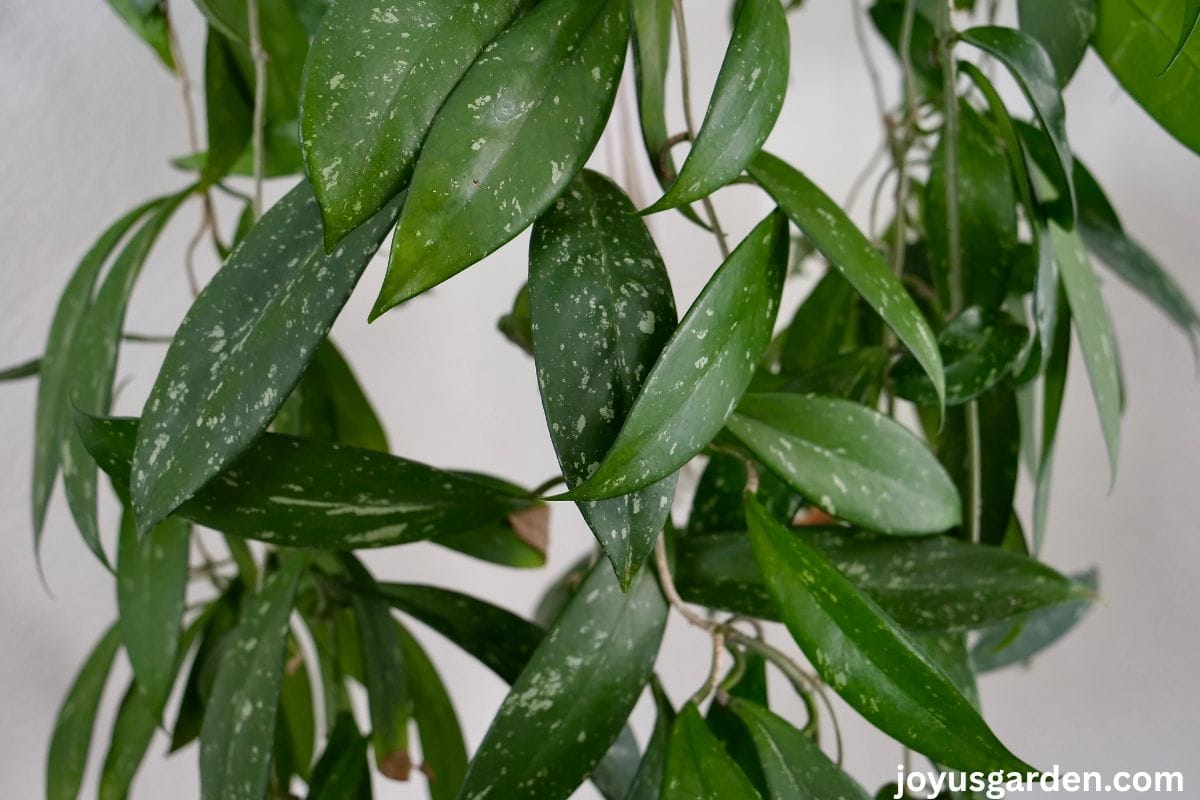
Hoya pubicalyx is a beautiful trailing houseplant with long, lance-shaped leaves. In this guide, I’ll share what I’ve learned about caring for this easy-going plant, including light, watering, potting mix, flowering, and more.
I live in the Sonoran Desert, where all my hoyas do well despite the heat and dry air. The variety I grow is Hoya pubicalyx Splash, but the care tips in this post apply to other Hoya pubicalyx varieties too.
Botanical Name: Hoya pubicalyx Common Name: Silver splash hoya, wax plant, silver pink vine (the variety I have is “Splash”)
Hoya Pubicalyx Care & Growing Guide
Uses
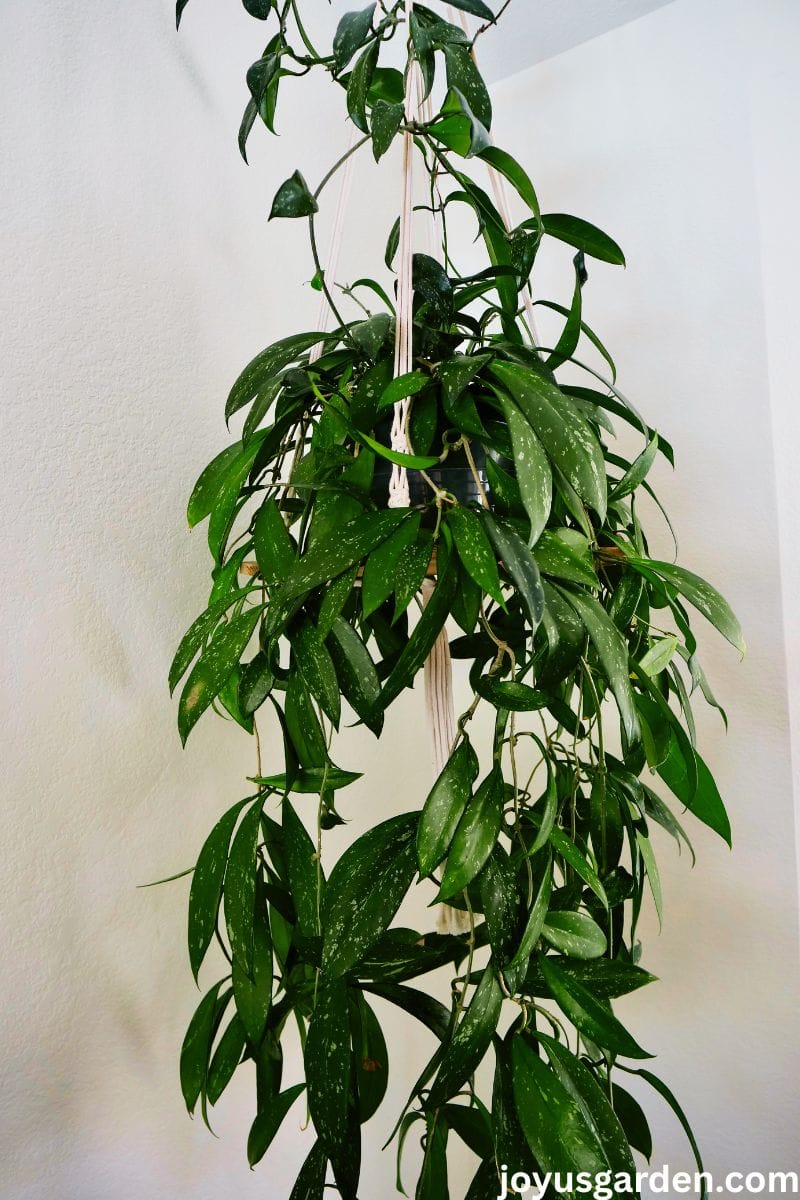
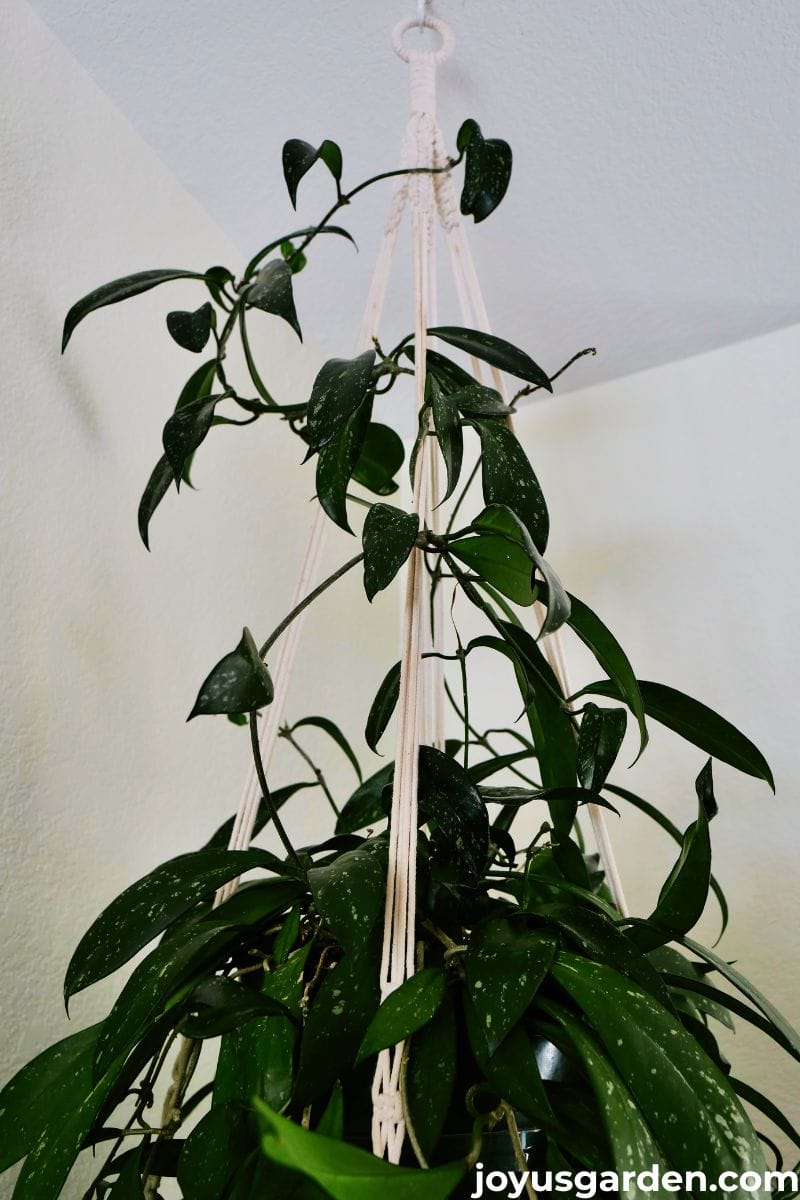
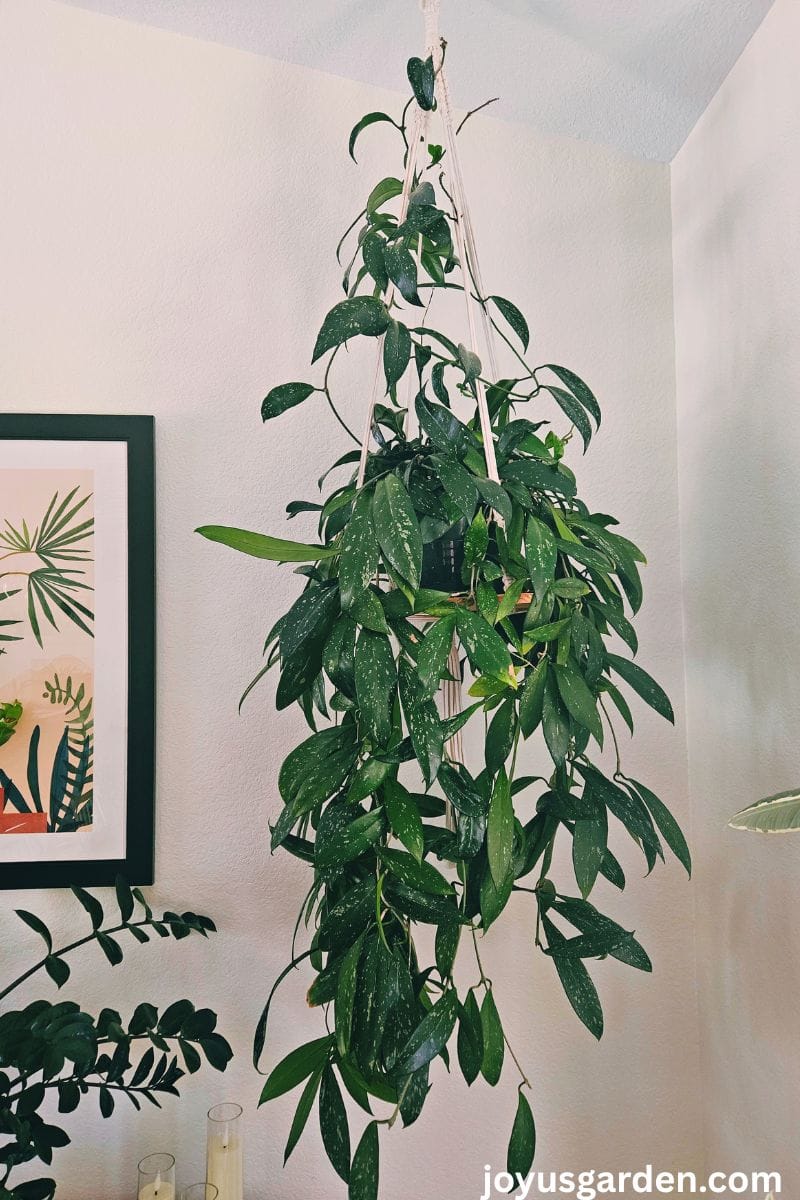
They’re trailing plants usually displayed in hanging containers or placed on a tall shelf or bookcase. Mine is growing on a hanging shelf. You can also train them to grow upward on a trellis or over bamboo hoops.
Growth Rate
Moderate to fast. I live in the Southern Arizona desert in a sunlight-filled home. Mine grows fast. The lower the light level and temperature, the slower the growth rate.
Size
They’re most commonly sold in 4″ or 6″ grow pots. I bought mine five years ago in a 6″ hanging pot and repotted it into an 8″ container last year. It now has 3′ long trails and is about 2′ wide. I prune it every year to keep it from getting too long.
They can grow over 10′ long and 3′ wide, but I’ve never seen one that big!
Light Requirements
A Hoya pubicalyx grows best in bright, indirect light (medium to moderate light exposure). Avoid placing yours in a hot, sunny window or direct afternoon sun, as those thick, succulent-like, glossy leaves can burn.
Mine hangs in a corner near, but not directly in front of, a trio of southwest-facing windows. There’s also a north-facing picture window across the room. We get plenty of sunshine year-round here in Southern Arizona, and that location has proven to be the sweet spot.
During the darker winter months, you might have to move yours to a brighter location. If the light levels are too low, your Hoya will grow more slowly, the leaves will get smaller, and the plant will get leggy. Here’s a post on Winter Houseplant Care that can help.
By the way, if you want your Hoya to bloom indoors, give it as much bright light as possible. That’s where a bright exposure really comes into play.
Watering Requirements
Most hoyas are epiphytic, meaning their roots are used primarily for anchoring rather than absorbing large amounts of water. I water mine when the soil dries out. Just because the surface is dry doesn’t mean the root ball is, so it’s always best to check before watering again.
In summer, I water mine every seven to eight days. In winter, it’s more like every ten to fourteen days. I use a soil moisture meter to make sure the soil is dry or nearly dry before watering. If you have a lot of plants like me, this tool will come in handy. I paid $13 for it, and six years later, it’s still doing the job!
Your plant may need water more or less often than mine, depending on the pot size, soil mix, light levels, temperature, and humidity in your home.
Because of their epiphytic nature, like bromeliads and orchids, they don’t like their feet to be consistently wet. Soggy soil can lead to root rot, which is one of the most common problems with these plants. A loose, well-aerated soil mix will help to prevent this.
Check out this guide to Watering Indoor Plants, which will shed light on when and how to water your indoor plants.
Temperature
If your home is comfortable for you, it’ll usually be comfortable for your houseplants too. Just be sure to keep your hoya away from cold drafts, as well as air conditioning and heating vents.
Even though I live in the desert, I keep my house on the warmer side during the summer months. My hoya, which loves warm temps, grows noticeably during this time.
Humidity
Hoyas are tropical plants that love a warm and humid climate. Even so, they adapt surprisingly well in our homes, which can lack sufficient humidity at certain times of the year. I live in hot, dry Tucson, and mine is growing beautifully.
I run a humidifier close by when humidity levels drop below 25%. I’m not sure how much it helps, but it can’t hurt! Misting the leaves a couple of times a week can also give your plant a little extra foliage moisture boost when it needs it.
More on houseplants and humidity.
Feeding/Fertilizing
During the active growing season, I fertilize my Hoya pubicalyx about once a month. Here in Tucson, that season runs long, from mid-February through the end of October. Currently, I use Liquid Kelp and Maxsea, which is granular. I alternate these fertilizers monthly and don’t use them all together.
Your start date may be later in a different climate zone with a shorter growing season. Feeding three to five times yearly with a houseplant fertilizer may be enough for yours.
Fertilizing too often or with too high a fertilizer ratio will cause salts to build up, eventually leading to root and leaf burn. This will show up as brown spots and edges on the leaves. If you fertilize more than three or four times a year, you can try using the fertilizer at half-strength. The label on the jar or bottle will guide you.
You don’t need to fertilize houseplants in late fall or winter because it’s not their active growing season. Be sure to avoid fertilizing a houseplant that is stressed, ie, bone dry or soaking wet.
More on fertilizing houseplants here.
Soil
The soil mix needs to be rich, well aerated, and fast-draining. I use 1/2 potting soil and 1/2 succulent and cactus mix. Make sure the pot has drainage holes so the excess water can flow out.
We’ve done a blog post on repotting hoyas and soil mix options with more details.
Repotting
Repotting is best done in spring or summer, although early fall is fine in warm climates.
Don’t think your Hoya will need repotting every year as they have a smaller root system. These are epiphytic plants, and like orchids, they often bloom better when slightly potbound. I generally repot my hoyas every four to six years.
I bought mine five or six years ago in a 6″ plastic hanging pot. It was looking stressed and the soil mix the grower used contained a lot of peat, which had become compacted and depleted over time. A few months after repotting, it really perked up in the fresh mix of half potting soil and half succulent and cactus mix.
You can see how I repotted my Hoya Kerrii – the technique is the same.
Training
You can let your Hoya pubicalyx trail naturally and do its thing, or you can train it to grow up a trellis, topiary form, or over bamboo hoops. My grows on a hanging shelf, and I’ve trained some of the vines to twine up the through the macrame hanger, but most trail down.
I trained my Hoya carnosa variegata to grow over bamboo hoops. It’s not hard to do, and it’s a look I happen to like.
Pruning
You can prune your trailing vine to control its size (they can get wild!), encourage bushier growth, thin it out, remove dead growth, or take cuttings for propagation. I prune mine every August or September to keep it from getting too long.
Don’t cut off the old flower stems, known as peduncles. Hoyas often bloom from the same spurs year after year. If your plant has flowered, avoid removing too many of these short stalks when pruning. In other words, a hard pruning (which is sometimes necessary) may delay flowering until new peduncles form.
Propagating
If you’re curious about multiplying your plant, I’ve written a post on how to propagate Hoyas. This guide covers five propagation methods, but the two I use most often are stem cuttings and division—they’re reliable, beginner-friendly, and great for expanding your hoya collection.
The easiest way to propagate a Hoya pubicalyx is by taking stem cuttings with 3–5 nodes and rooting them in water or a light potting mix. Dividing a mature plant can be tricky because it’s usually very dense and tightly packed. You may not end up with evenly sized divisions, but that’s okay as long as each section has healthy roots and stems.
Pests
Hoya plants are generally low maintenance, but they can occasionally attract pests, I know from experience! Mealybugs are the most common. These white, cotton-like insects love to hide in leaf nodes and on the undersides of leaves. As soon as I spot them, I either hose them off with water or dab them directly with a cotton swab dipped in rubbing alcohol.
My pubicalyx had an infestation of orange aphids a few years ago. I moved it outdoors into a shady spot and sprayed it twice, eight days apart, which took care of the problem. And, no aphids have returned since – so far anyway! I’ve also dealt with aphids on my Hoya kerrii. I use Captain Jack’s Insecticidal Super Soap, and it has worked well for me.
Keep your eye out for scale and spider mites too. It’s best to take action as soon as you see any pests because they multiply like crazy and can spread to your other houseplants.
Pet Safety
Sound the trumpets! Hoyas are non-toxic and great pet-safe options. I consult the ASPCA website for this information. Just know that if your pet chews on the leaves or stems, it could make them sick.
Flowers
Yes they do! Saving the best for last – Hoya pubicayx flowers are beautiful. Their waxy, star-shaped blooms in clusters are a mix of light and deep pink.
When your plant blooms depends on several factors, including its age, light levels, and overall care. Most Hoyas need to be at least 3–5 years old before they’re mature enough to flower. They also have a better chance of blooming when they’re slightly potbound.
As I mentioned in the pruning section, don’t cut off the old flower stems. Hoyas often bloom from the same spurs, or peduncles, year after year. My Hoya carnosa doesn’t bloom on a set schedule, it tends to bloom whenever it feels like it!
Indoors, hoyas take longer to bloom. If yours has never flowered, it’s most likely not getting enough light or isn’t mature enough.
Hoya Pubicalyx FAQs
Why is my Hoya Pubicalyx Splash growing slowly in winter?
Plant growth naturally slows down in cooler months – the lower light and shorter days signal the plant to rest. in spring, the foliage growth starts once again.
Why are my hoya leaves turning yellow?
Older leaves can yellow naturally as the plant grows. But if several leaves turn yellow at once, it’s commonly a watering or drainage issue. Hoyas need soil with good drainage and to dry in between waterings.
Do Hoyas need full sun? Will my Sweetheart Hoya get sunburned on a windowsill?
Hoyas like bright natural light but no direct hot sun. A moderate or medium exposure is where they do best. Yes, they will burn if in or on a west or south facing window or sill.
Will my Hoya Pubicalyx Splash ever bloom indoors? How do I encourage flowers?
Yes, mature plants can bloom indoors if they get enough bright, indirect light and are kept slightly root-bound.
I have four hoyas, and only one blooms. In my experience, they don’t bloom regularly and will do it when they please.
They need plenty of bright light, time, and a bit of stress (like being slightly root-bound) to trigger flowering. An older plant has a better chance of blooming.
Can I grow a Hoya Pubicalyx Splash outdoors?
Yes, but only in mild climates (USDA hardiness zones 10-12). If you live in a colder climate, you can set yours outdoors in bright shade during warm months, protected from harsh afternoon sun. Bring it back indoors before temperatures drop.
Do Hoyas climb?
Yes, they both climb and trail. In their native tropical forests, this vining plant climbs up other plants.
Why does my Hoya grow long vines with no leaves?
This is normal for many hoyas. My Hoya pubicalyx splash has those runner or searching vines which eventually produce leaves once they find favorable growing conditions and enough light.
Why is my Hoya publicalyx sticky?
If the leaves are sticky, inspect for pests like mealybugs or aphids. If it comes from the flowers, it’s likely the natural nectar.
Hoya Pubicalyx Video Guide
In Conclusion, the three most important things to remember when growing this stunning tropical vine are simple: it thrives in bright, indirect sunlight, prefers to dry out between waterings, and needs a well-draining soil mix to keep its roots healthy.
With their waxy leaves and clusters of star-shaped flowers, Hoya pubicalyx plants make beautiful additions to a hanging basket, plant shelf, or any bright spot in your home. Plant lovers, if you don’t already have one, add it to your “must get” list!
For more of the same, check out 14 Hanging Houseplants We Love & Fast Growing Houseplants.
Happy gardening,

- About the Author
- Latest Posts

Nell, the founder of Joy Us garden, was born into a gardening family and grew up in Connecticut’s countryside. After living in Boston, New York, San Francisco, & Santa Barbara, she now calls the Arizona desert home. She studied horticulture & garden design, working in the field all her life. Nell is a gardener, designer, blogger, Youtube creator, & author. She’s been gardening for a very long time & wants to share what she’s learned with you.