Propagating Pothos: How To Propagate Pothos Plants 3 Ways
Pothos are popular trailing houseplants that grow fast. Sooner or later, you’ll need to prune yours, so you might as well put the cuttings to good use. This guide on propagating pothos walks you through pruning, three ways to propagate pothos plants, after-care, and a few extra tips to help you along the way
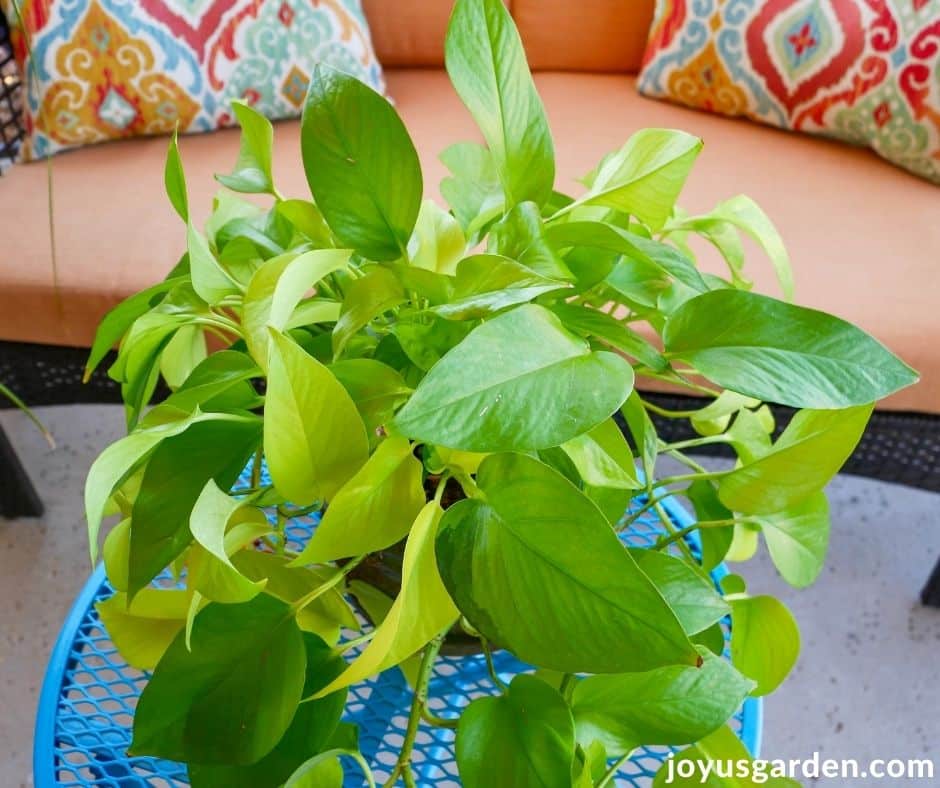
Pothos come in all kinds of colors, patterns, and leaf sizes, and you can find them almost anywhere. They’re one of the easiest plants for beginners, and these propagation methods work for all pothos varieties.
Botanical Name: Epipremnum aureum Common Name: Pothos, Devil’s Ivy
A Guide To Propagating Pothos
The method I use to propagate pothos is via stem cuttings in water. They have aerial roots, so propagating a pothos is a snap. You can also do stem cuttings in soil mix – more on that further down. Division is another option, but they can be tricky to divide easily because the stems are so intertwined.
When Should I Propagate Pothos?
The best time for pothos propagation is during the growing season – spring, summer, or early fall. If you need to take cuttings in winter—maybe a long trail breaks off—don’t worry. Just pop the pieces in water or a light potting mix, and they should root just fine.
Reasons To Prune A Pothos Plant
A pothos grows fast, and once yours hits the 3-year mark, regular pruning helps with overall health. You can trim it to control the length, make it grow fuller, or take cuttings for propagation.
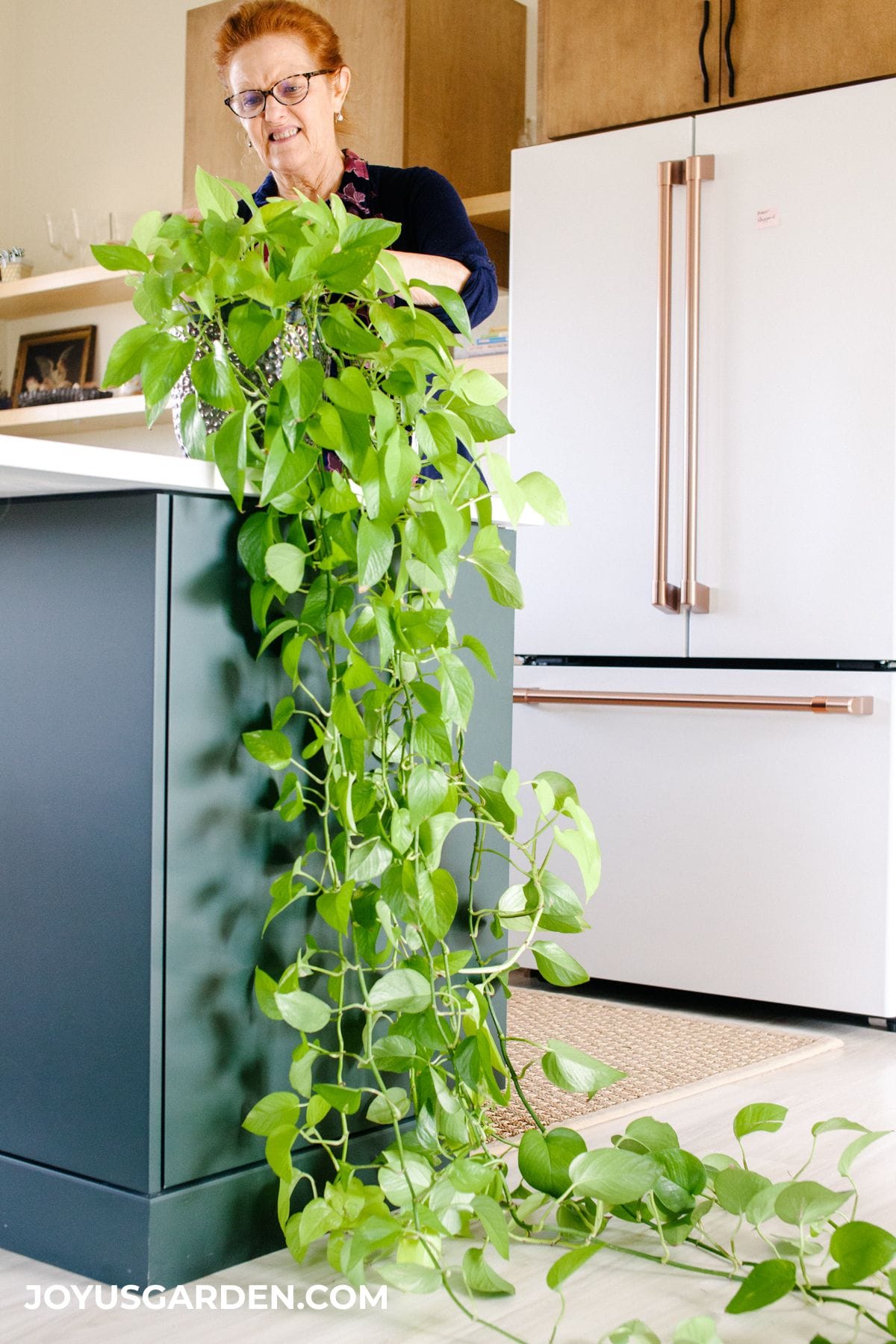
I have a Golden Pothos that’s about eight years old, and I prune it four or five times a year to keep the trails from dragging on the floor. I also trim out the inner trails that get buried under the thicker outer ones. Doing this keeps the plant healthier and growing evenly.
How to Make A Pothos Fuller
This is a common question and it ties right in with pruning. As your pothos gets older, the top can start to thin out. Trimming the tips of the trails—or doing a more extensive prune—encourages it to branch out and grow new shoots at the top.
Those fresh trails growing from the top also help cover any bare spots on the stems where older yellow leaves have dropped. If your Pothos looks thin all over, that’s a sign it needs more light.
Here’s how I keep my Golden Pothos lush and full.
What You’ll Need For Pothos Propagation
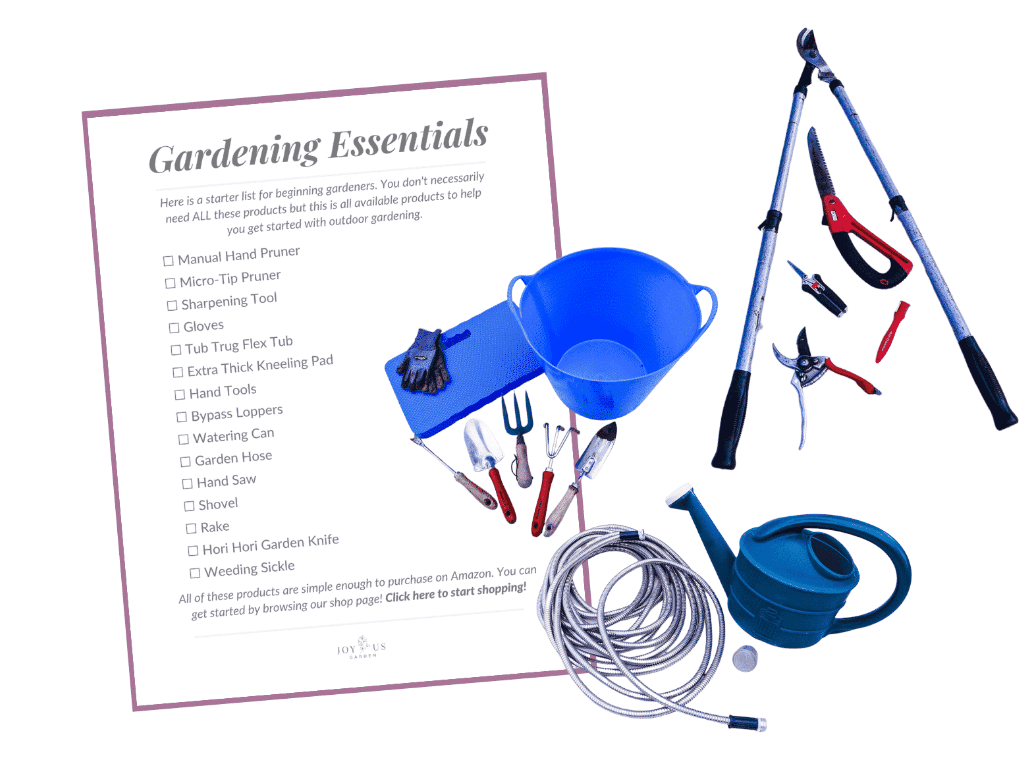
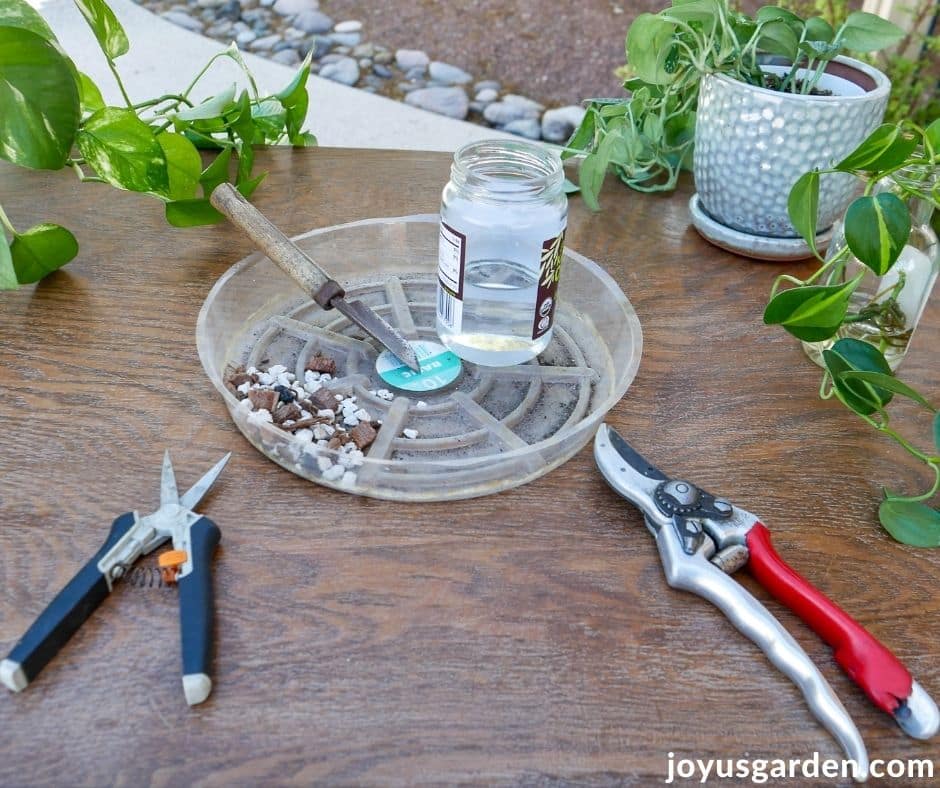
You don’t need much for this project. A clean and sharp pruning tool is the most important thing. I like using my floral snips because they make clean, precise cuts, but pruners or a good pair of scissors work too. The small trowel pictured above comes in handy when I plant the rooted cuttings back into the mother plant or pot them up on their own.
Water Propagation: I root most of my cuttings in water, so I use a glass jar or water glass. Use whatever container you like, but I prefer a clear one so I can see how the rooting action is progressing.
Soil Propagation: If you’re rooting in soil, you’ll need a small pot and a light medium like my DIY succulent and cactus soil mix. Pothos roots are tough so a potting soil on the lighter side is fine to use too. Some people use rooting hormone, but I feel you don’t need it with pothos because they root so readily.
Division: I’ve only divided a pothos one time. I used a dull knife to separate the plant into two. You’ll also need appropriately sized pots to fit each new plant, and a potting soil formulated for houseplants.
Where To Cut Pothos
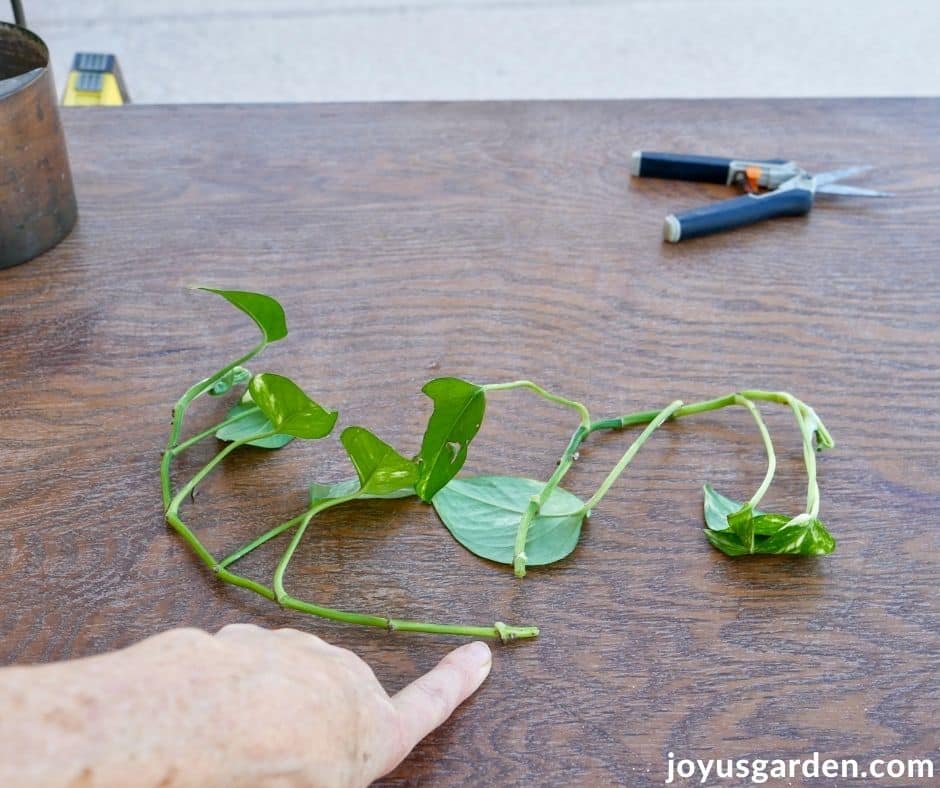
Make your cuts straight across, about 1/8″ or so below a root node.
My well-established Golden Pothos sits on top of a bookcase, and quite a few of the trails were hitting the floor. I trimmed them about 2–4″ above the spot where I wanted the new growth to start. A fresh stem will grow from a node just above the cut, and that new trail will eventually hang down.
This usually buys me around four to six months before I need to prune those stems again. I did the same thing with my Pothos N’ Joy and Neon Pothos the year before and it worked great.
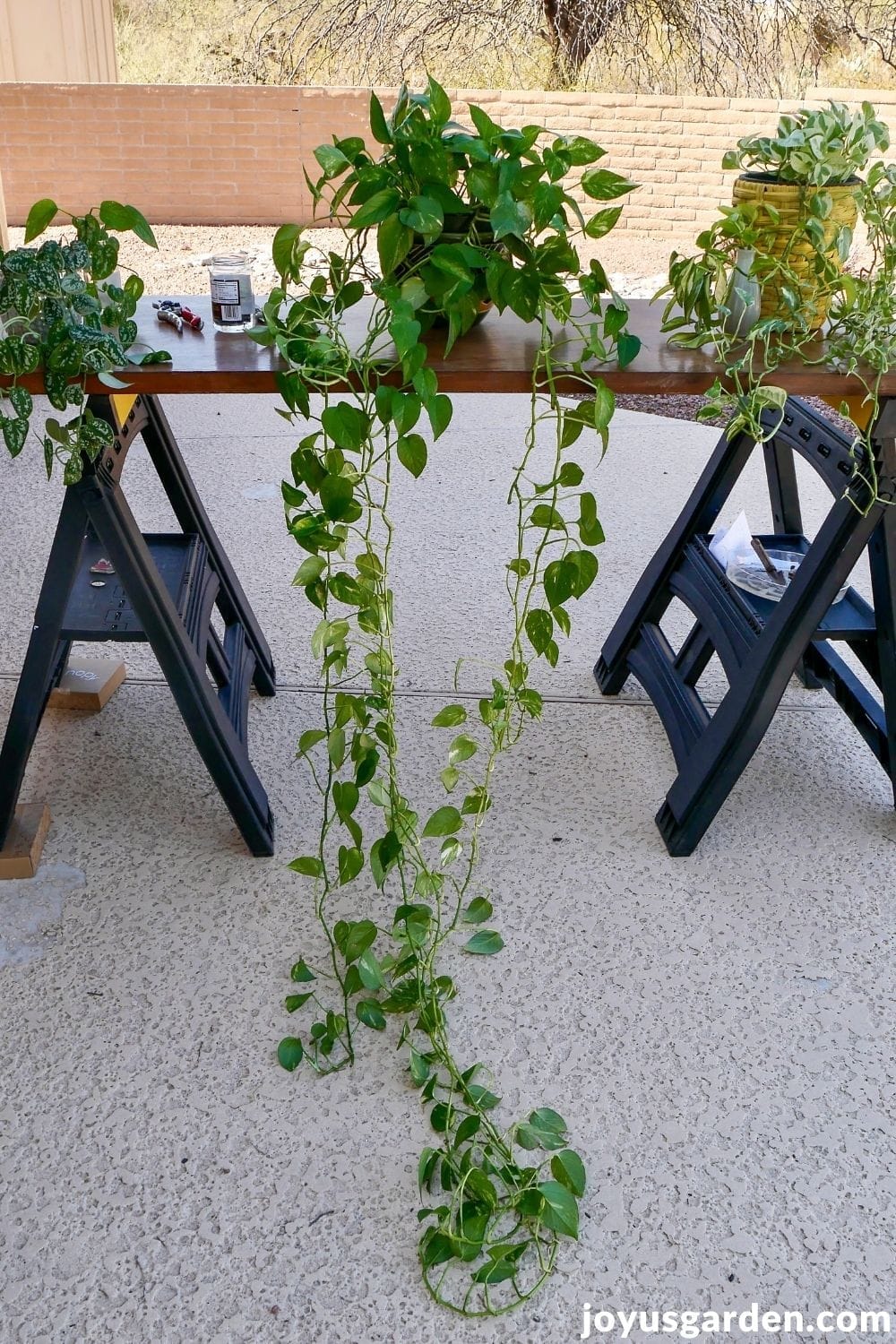
What Size Cuttings Should I Take
I’ve taken both long and short cuttings, and both root just fine. The longest one I’ve taken was about 24″, but I usually prefer cuttings in the 6–12″ range. They’re easier to handle and a lot simpler to plant once the roots are ready, especially since I like to propagate in water.
Longer cuttings can get a little leggy while they root, but they still grow just fine. If they’re long and heavy, you might need to pin them down to help them stay in place once you plant them.
How To Propagate Pothos-Steps To Take
Gather your materials.
Make your cuts straight across, just below a node. Place the cuttings in water or a light soil mix. You don’t need to let them heal over like you would with succulents.
If you’re rooting in water, be sure the bottom node (or two) stays submerged. For shorter cuttings, I submerge one bottom node. For longer ones, I make sure that two nodes are underwater.
If you’re rooting in a mix, moisten it well before planting. Then place the cuttings so that 2–3 of the bottom nodes are tucked into the soil.
If you’re dividing a plant, start by gently separating the trails as much as you can. Then pull the rootball apart with your hands or use a dull knife to split it into the sections you want. Plant each division into a pot that fits its size, using fresh potting soil formulated for houseplants. A quick heads-up: a healthy pothos vine grows thick, and the trails tangle together. Pulling it apart for division can be a challenge!
Where To Put Pothos After Propagating
Keep your pothos cuttings or plants in a bright spot. Mine are rooting on a ledge in an east-facing bedroom window that gets lots of natural light (I’m in Tucson, so the sunlight is strong).
Too much direct sunlight can burn the plant, but low light will cause weak, stunted growth. A bright area out of harsh sun is the sweet spot.
If you’ve divided a plant, place the new pots back in the same spot where the mother plant was growing well, or choose another spot with bright, indirect light.
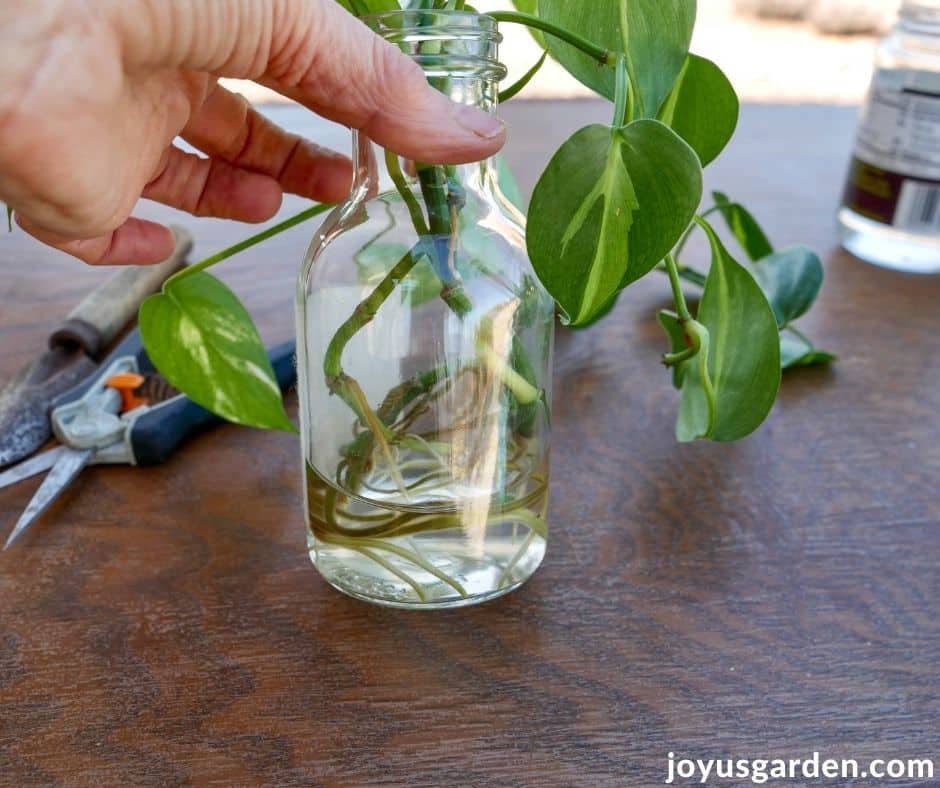
How To Maintain Pothos While Propagating
If rooting in water:
Change the water every 7–14 days to keep it fresh. Keep an eye on the water level so the new roots never dry out.
If rooting in soil mix:
Water every 5–8 days, depending on the pot size, soil, and temperature. I water Pothos cuttings (or divisions) a bit more often than an established plant because you don’t want the mix—or those tender new roots—to dry out.
If dividing:
Care for the new pothos plants the same way you normally would. The roots have been disturbed, so try to keep the soil evenly moist—not too wet, but not bone-dry either.
When Will The Roots Start To Emerge
With water propagation, you can actually watch the roots grow. You’ll usually see new roots starting to poke out in about two weeks. The nodes are brown, and the new roots are white and fleshy. Pothos propagation isn’t just easy—it’s quick, too!
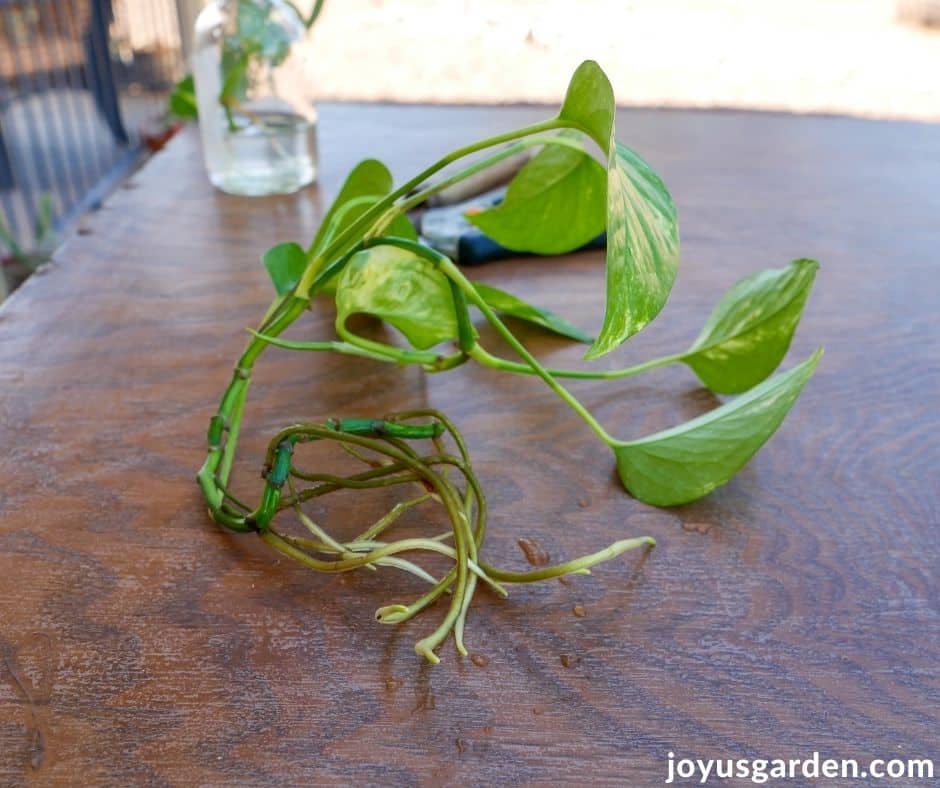
When Are The Cuttings Ready To Plant?
Pothos cuttings are tough, so you can plant them a couple of weeks after the roots start to emerge.
I like to wait about two months. By then, the roots are stronger and better formed.
As you’ll see toward the end of the video below, I had to prune some roots on cuttings that had been in water for 7–8 months. The root systems were so long and tangled that there was no way to tuck them back into the mother plant without trimming them first.
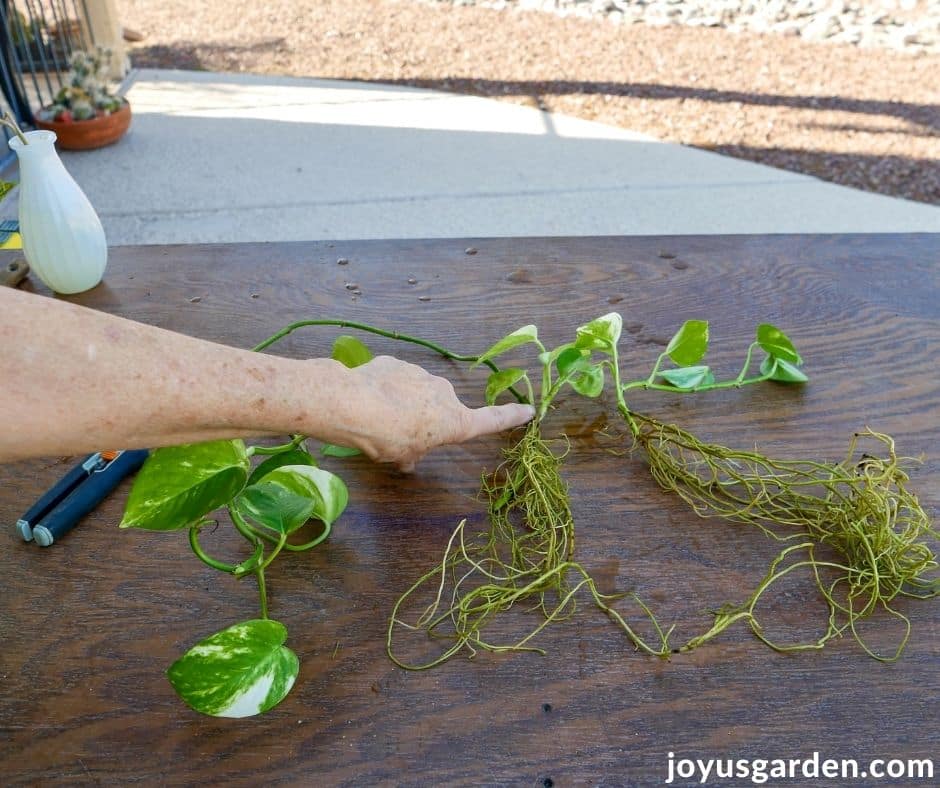
Planting Pothos Cuttings In Water Once They’re Rooted
You can start a new plant with your rooted cuttings, or plant them back into the mother plant. If you rooted yours in soil in a 4″ pot, they can stay in that pot for a good while before needing more space.
I already have four pothos, which is plenty for me, so I planted my cuttings back into the mother plants to fill in the bare spots at the top. You’ll see how
Propagating Pothos Video Guide (focusing on water propagation)
More on Pothos Care:
- Pothos Care: the easiest trailing houseplant
- Neon Pothos Care
- Golden Pothos Care
- Marble Queen Pothos Care
- Pothos NJoy Care
- Pothos Repotting
- 5 Things To Love About Pothos
- 11 Reasons Why Pothos Is The Plant For You
- Answering Your Questions About Pothos Care
Pothos Propagation FAQs
Can you propagate Pothos without a node?
No. The roots emerge from a root node, so you’ll need at least one node on each cutting.
How long does it take Pothos to root in water?
You’ll usually see roots poke out in about two weeks. I consider them well-rooted at around two months. Your timing may vary slightly depending on your light, temps, and overall growing conditions.
Can Pothos live forever in water?
No. The longest I’ve kept pothos cuttings in water was about a year and a half. A friend kept some in water for over three years, but the stems and leaves had gotten thinner and less robust. Eventually, the plant will need nutrients from the soil to stay healthy and look its best.
What happens if you leave a cutting in water for too long before planting it in soil?
It may have a harder time adjusting. As I mentioned above, I left some cuttings in water for over a year, and the roots grew long and tangled. That made them tough to plant, and I had to trim some of the roots just to get them to fit in the pot.
Do Pothos grow better in water or soil?
For the long haul, soil. It gives them the nutrients they need to grow and stay healthy.
Can Pothos cuttings survive in low-light areas while they’re rooting, or do they need bright light immediately?
If your cuttings are only in water for a couple of weeks, low light is fine. For best results, place your cuttings in a spot with bright light, out of direct sun.
How do you keep a Pothos from getting leggy?
It might need brighter light. Or, consider pruning the long stems to encourage fullness and new growth.
How long does a Pothos plant live?
I threw this one in just for fun. I’ve moved to different cities in different states and have left many of my houseplants behind with friends. The longest I’ve grown a Pothos for is nine years.
Conclusion: Turning an overgrown pothos into new plants is a satisfying way to expand your houseplant collection. With the different ways of Pothos propagation, you can create healthy plant babies that grow into full, thriving vines. Pothos are favorite indoor plants, and propagating lets you share them or fill in bare spots—making plant collections even more lively!
Happy gardening,

- About the Author
- Latest Posts

Nell, the founder of Joy Us garden, was born into a gardening family and grew up in Connecticut’s countryside. After living in Boston, New York, San Francisco, & Santa Barbara, she now calls the Arizona desert home. She studied horticulture & garden design, working in the field all her life. Nell is a gardener, designer, blogger, Youtube creator, & author. She’s been gardening for a very long time & wants to share what she’s learned with you.