Monstera Aerial Roots: What They Are & What To Do
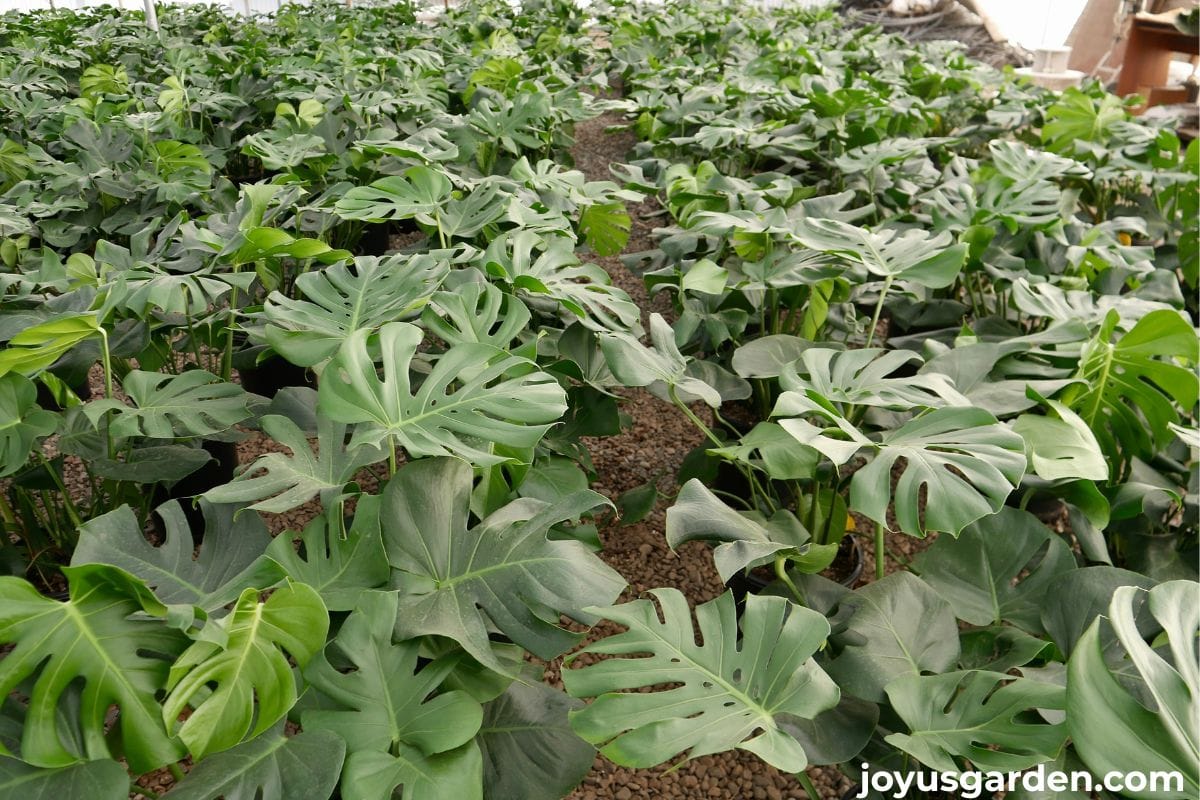
If you want that tropical, indoor jungle feel, you can’t beat this plant. The large, fenestrated leaves open slowly, but the plants themselves grow fast. As yours grows and ages, you’ll notice long, brown root-like things growing off the stems—these are aerial roots. Here’s what Monstera aerial roots are, the purpose they serve, and options for what to do with them.
Botanic name: Monstera deliciosa Common name: Swiss Cheese Plant, Split-Leaf Philodendron
Monstera Aerial Roots: What They Are & Why They Grow
What are Aerial Roots
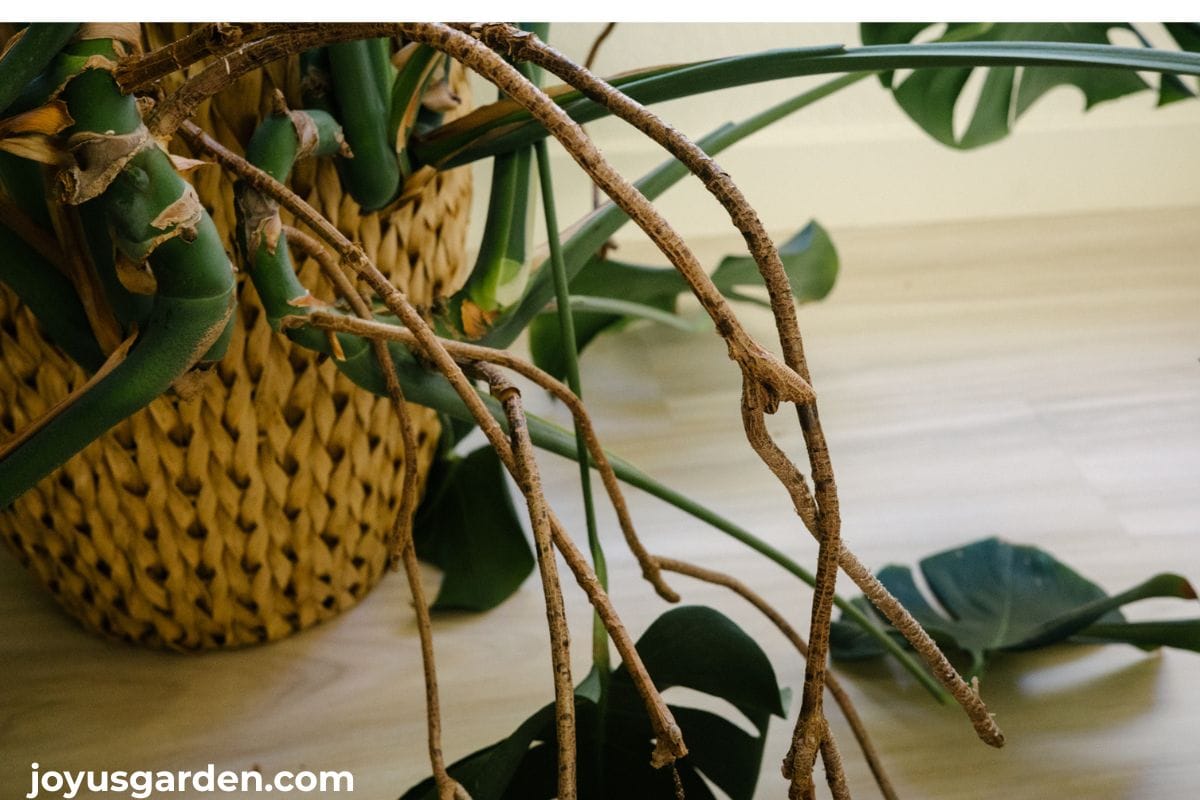
They’re roots that form on the stems, initially growing above the soil instead of below it. This is a natural part of how monsteras grow in the wild. Those wild, stringy roots growing off your plant aren’t a problem—they’re part of what makes them so unique.
What Aerial Roots do for a Plant
Plants use these strong roots to climb on other plants and rocks, and to absorb moisture and nutrients. As a plant gets larger, they also help anchor it in place.
Monstera plants are classified as climbing vines and are breathtaking to see in their natural habitat. They grow along the tropical forest floor until reaching a plant, most often a tree, to attach to. These thick monstera aerial roots help the plant to climb over 50′ tall, reaching towards the sunlight. And, as they age and climb, the leaves get enormous!
Popular Houseplants with Aerial Roots
In my experience, the monstera exhibits the biggest and most obvious aerial roots of all houseplants. You’ll also see them on Phalaenopsis orchids, pothos, tillandsias, philodendrons, and ficus’.
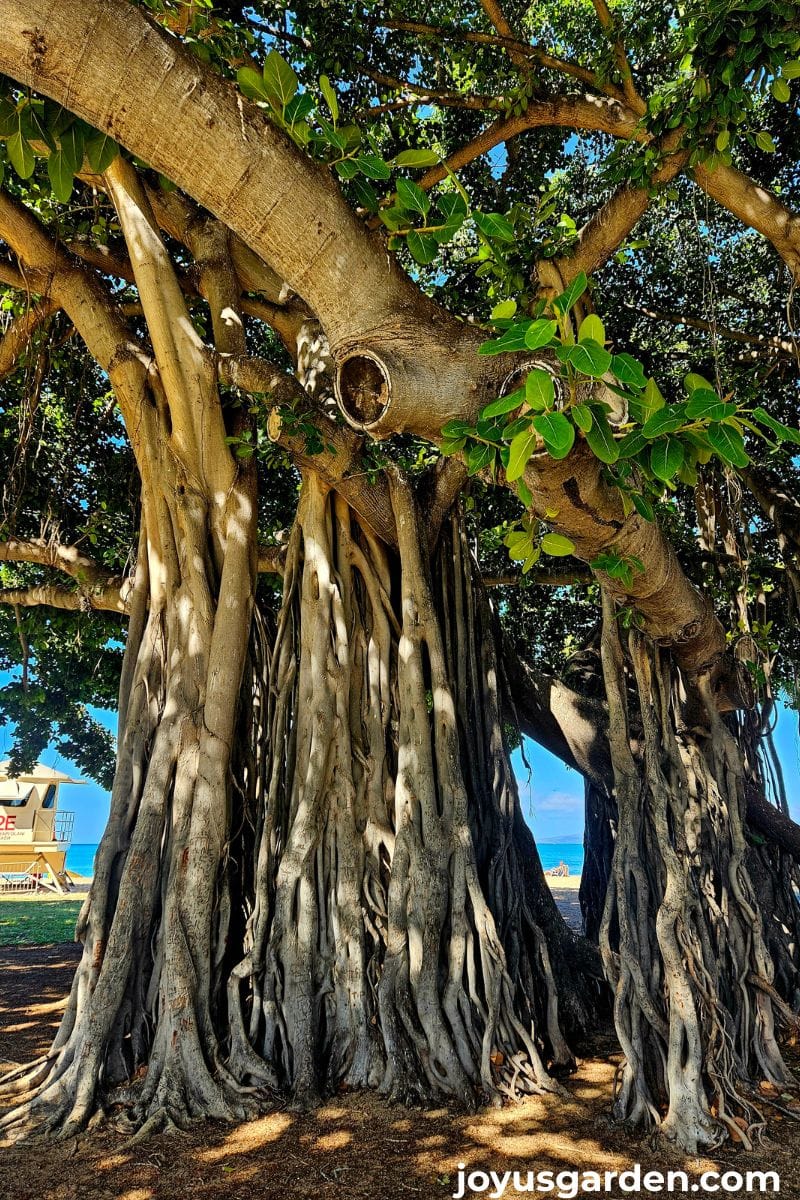
I was in Hawaii a few months ago, and many plants there have aerial roots. Banyan Trees (a type of ficus) are great examples. They help to steady these huge trees (they grow to 100′) and provide extra nutrients. Ivy is another example – the Ivy League schools earned this name because ivy climbs and covers the brick buildings via aerial roots.
When do Monstera Aerial Roots Emerge
Small brown nubs are visible on the stems early on. As the plant ages, longer aerial roots form towards the base and wrap around or grow out of the pot. By year three, you’ll see some substantial ones.
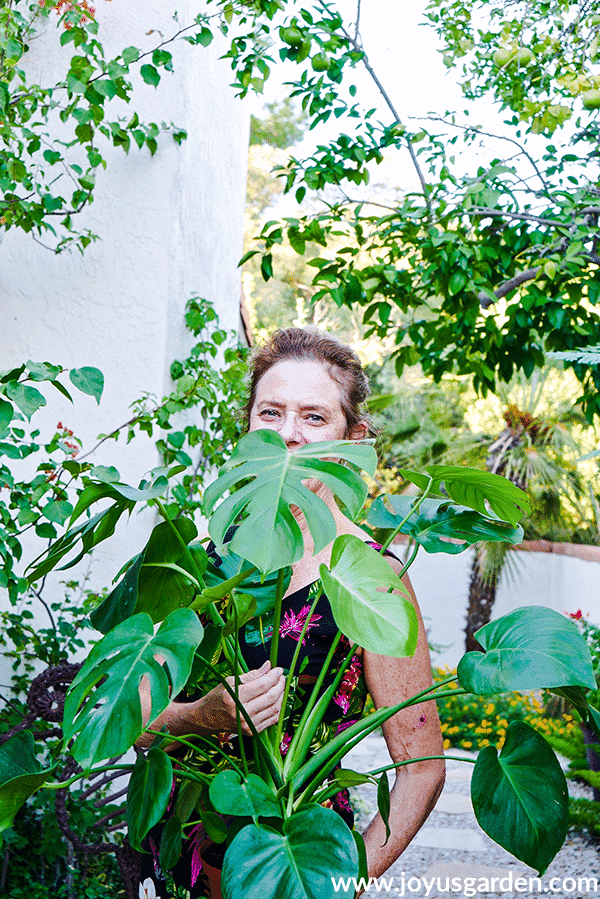
About two and a half years ago, I took two cuttings from my monstera plant, rooted them, and planted them in a 10″ grow pot. The mother plant has many large, well-developed aerial roots, and the younger plant has put out four good-sized ones.
I live in the Arizona desert, so the aerial roots aren’t as plump and thick as they would be in a more humid climate. Higher humidity helps them grow thicker and stay more flexible.
What to do with Aerial Roots
Aerial roots might look a little wild, but they’re easy to manage. There’s no one way to handle them—it mostly comes down to preference.
- Nothing. If they don’t bother you, leave them as they are.
- Cut them off. If you don’t like the look, it’s fine to remove them.
- Trim them. This is what I do. Once they reach the floor, I trim them up. If they’re dried out, I eventually cut them off completely.
- Put them in the soil. If you have room in the pot, you can guide aerial roots into the soil. This can help the plant take in extra moisture and nutrients. My pots are pretty full, so I’ve only done this with a couple of roots.
- Train them to grow on a support structure. This will help the plant attach and grow upwards. When the plant is small, a moss pole will do. For large plants, you’ll need a wooden plank.
Can you propagate an Aerial Root?
Yes, and no.
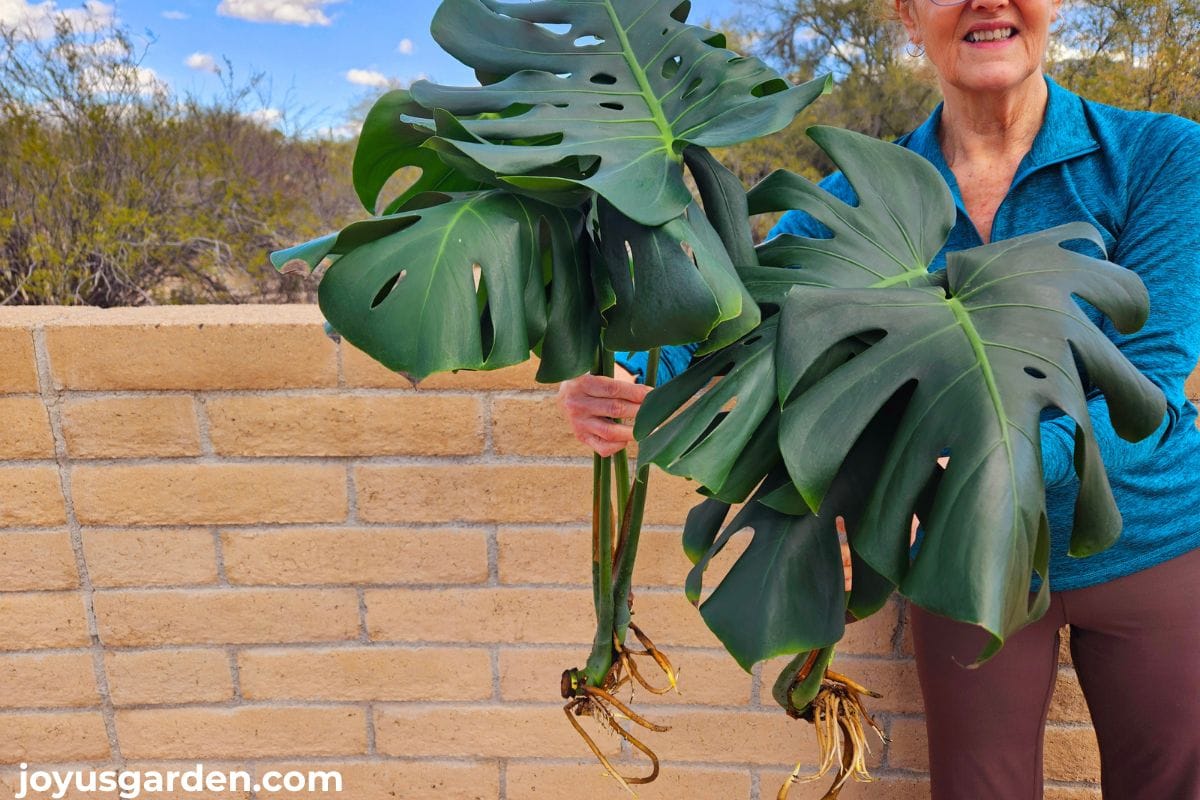
If you cut off only a large aerial root and try to propagate it in water or soil, it won’t work.
For propagation to work, you need a stem cutting. That means cutting a section of stem with at least one leaf and a node, where an aerial root (small or large) will emerge from. A node is the small bump or joint on the stem where roots and leaves grow from. This type of cutting can be propagated in water or in a light potting mix.
You can also propagate a monstera by division, but that’s much easier to do when the plant is smaller.
Monstera Aerial Root FAQs
Do a monstera’s aerial roots grab onto walls or damage surfaces?
Indoors, no, these vining plants won’t grow up a wall or damage floors or nearby surfaces. If you want yours to climb, give it a moss pole or wooden support. That’s what the aerial roots will grab onto, enabling it to grow upwards.
Do aerial roots mean my Monstera is root-bound or needs repotting?
No. It’s just the way the plant naturally grows and isn’t a sign it needs a bigger pot. If you think yours needs repotting, check the roots in the pot. If they’re tightly packed or coming out the bottom of the pot, then it may be time to repot.
Why do some aerial roots dry up while others keep growing?
A typical home environment isn’t as humid as the tropics, where these plants grow. Older aerial roots tend to dry out due to lower humidity. Newer roots usually stay more flexible. If you want them to stay plumper, try increasing the humidity.
Why does my Monstera have aerial roots but isn’t making new leaves?
This is usually due to a lack of light. In low light conditions, you won’t see much, if any, new growth, and the plant will become spindly. You’ll need to move it to a brighter spot with bright, indirect light to encourage new leaves and stronger growth.
Do aerial roots grow faster in higher humidity or lower light?
These plants are native to humid environments. Good light also helps overall growth, so a mix of bright, indirect light and higher humidity will give you the best results.
If you’d like more in-depth guidance, check out our post and video on Monstera deliciosa care. In a nutshell, provide bright, indirect light (no direct, hot sun), water when the soil is dry, fertilize during the growing season, and expect to repot every 3 years, because once this plant settles in, it grows fast.
Conclusion: Once you understand them, Monstera aerial roots become just another simple part of Monstera care. The plant’s aerial roots help it climb, anchor, and grow strong. Instead of being a problem, they’re a good indication your plant is healthy and growing the way it should.
Happy gardening,

- About the Author
- Latest Posts

Nell, the founder of Joy Us garden, was born into a gardening family and grew up in Connecticut’s countryside. After living in Boston, New York, San Francisco, & Santa Barbara, she now calls the Arizona desert home. She studied horticulture & garden design, working in the field all her life. Nell is a gardener, designer, blogger, Youtube creator, & author. She’s been gardening for a very long time & wants to share what she’s learned with you.