Plant Care Kit: 5 Houseplant Essentials For Beginners
Are you a budding plant parent who loves indoor plants but isn’t sure what you really need to get started? You don’t need much at first, but these five basics will get you rolling. A simple plant care kit makes the whole plant care game much easier.
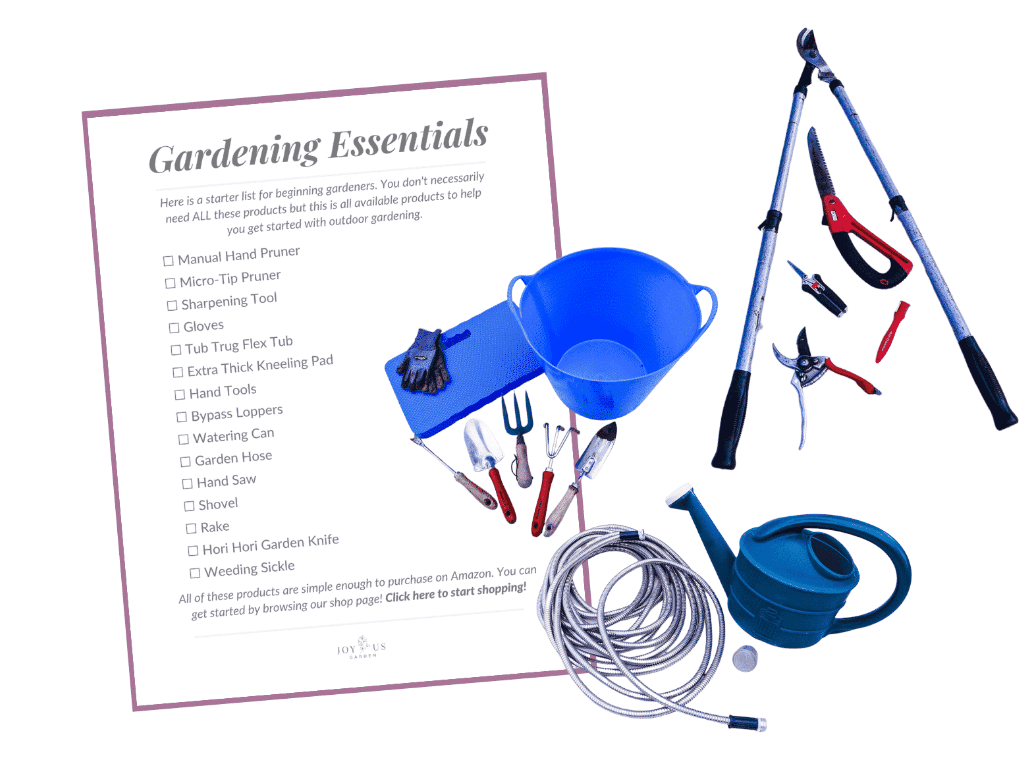
These basics I’ve chosen help you start a simple plant care routine. As your plants grow and your collection gets bigger, you can add more houseplant essentials. I’ll share a few extras to think about at the end. Pictured are what I use – you can find a version of each for under $15, so no breaking the bank here!
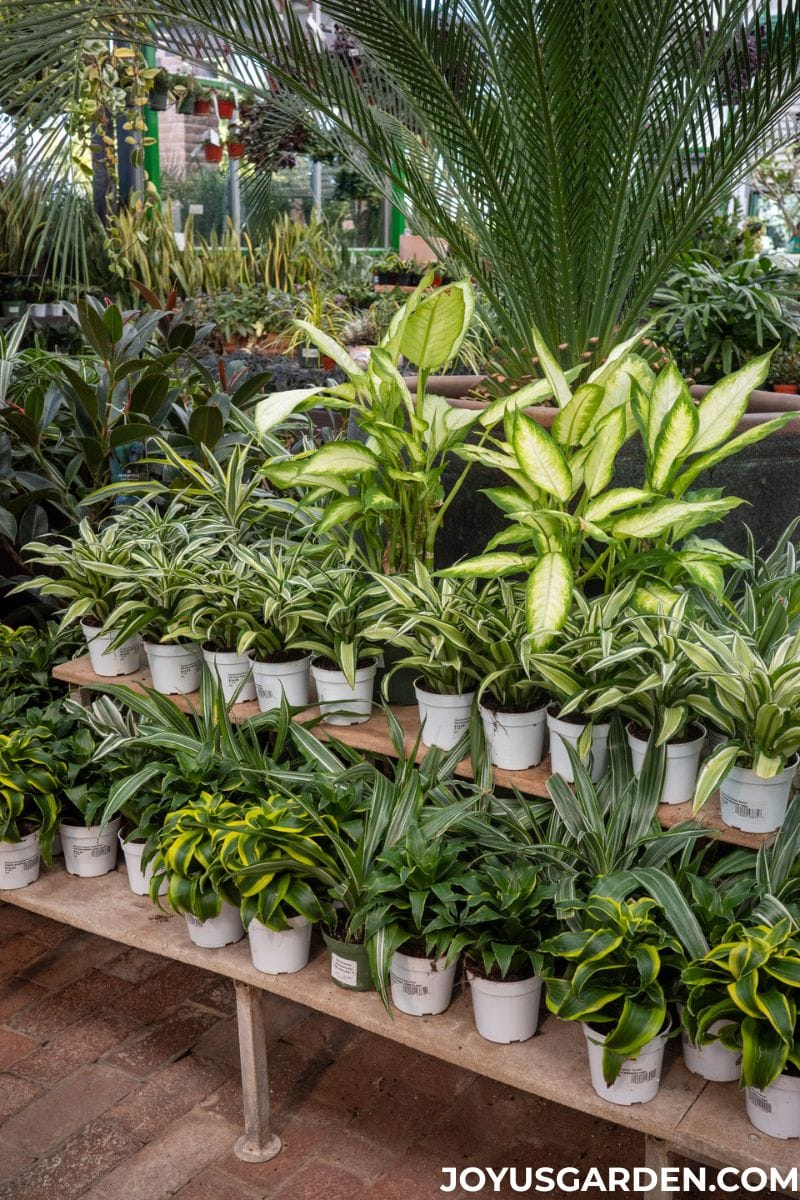
The first two basics should come home with your plant, and the other three can be added a little later.
Plant Care Kit Essentials For Beginners
I don’t keep all my tools and supplies in one spot, but I always put everything back after using it so I can find it next time. You might want a bag, box, basket, or bin to store yours in. When you know where things are, caring for your plants feels a lot simpler.
1) Watering can.
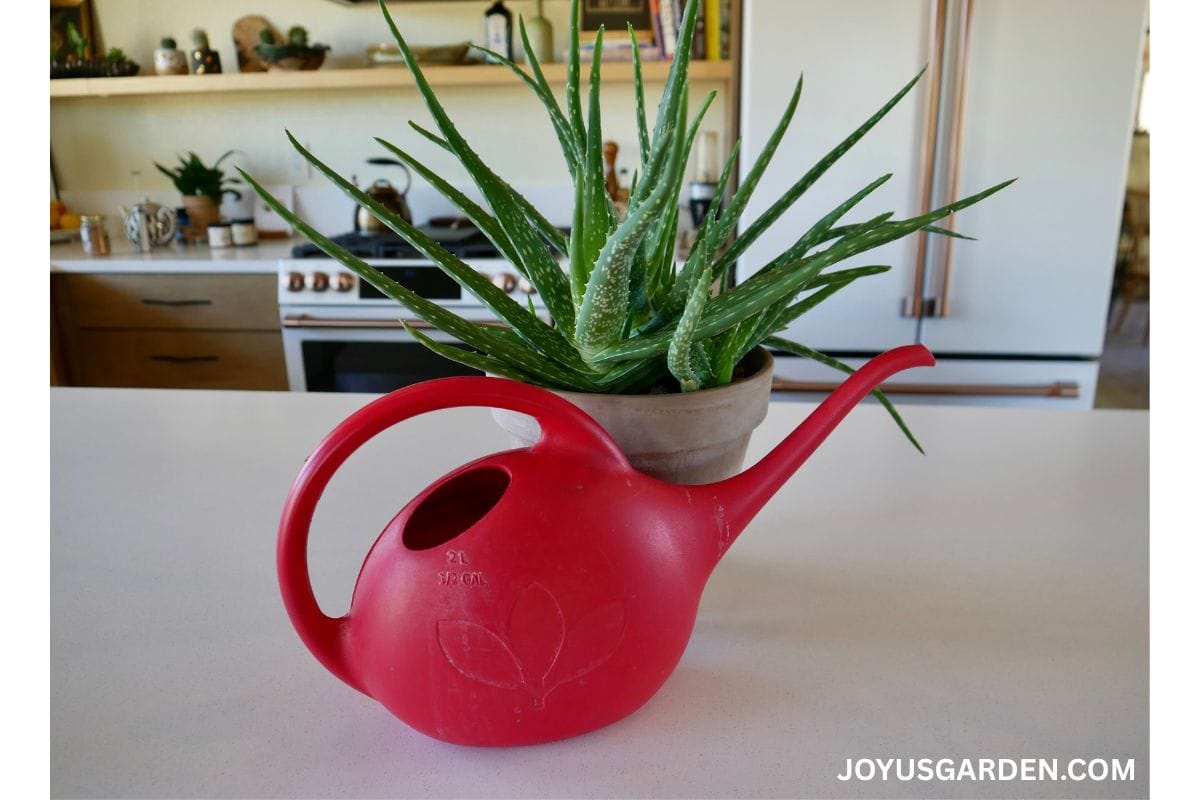
This, and a moisture meter (#2), are the two most important things to start with. Plants need light and water, and the right watering can makes the job a whole lot easier. There are so many kinds to choose from, different materials, sizes, colors, and styles. I have 70+ houseplants and use two cans: a small metal one for tiny plants and a bigger plastic one (in the photo below) for medium to large plants.
If you’re sticking with small plants, one small can is all you need. I like a can with a longer spout because it helps me reach the soil without splashing and makes watering more precise. Just keep this in mind: the wider the spout opening, the faster the water comes out. If you tend to overwater or have a heavy pour, a narrow spout gives you better control.
You’ll want to check out this guide to Watering Indoor Plants.
2) Moisture meter
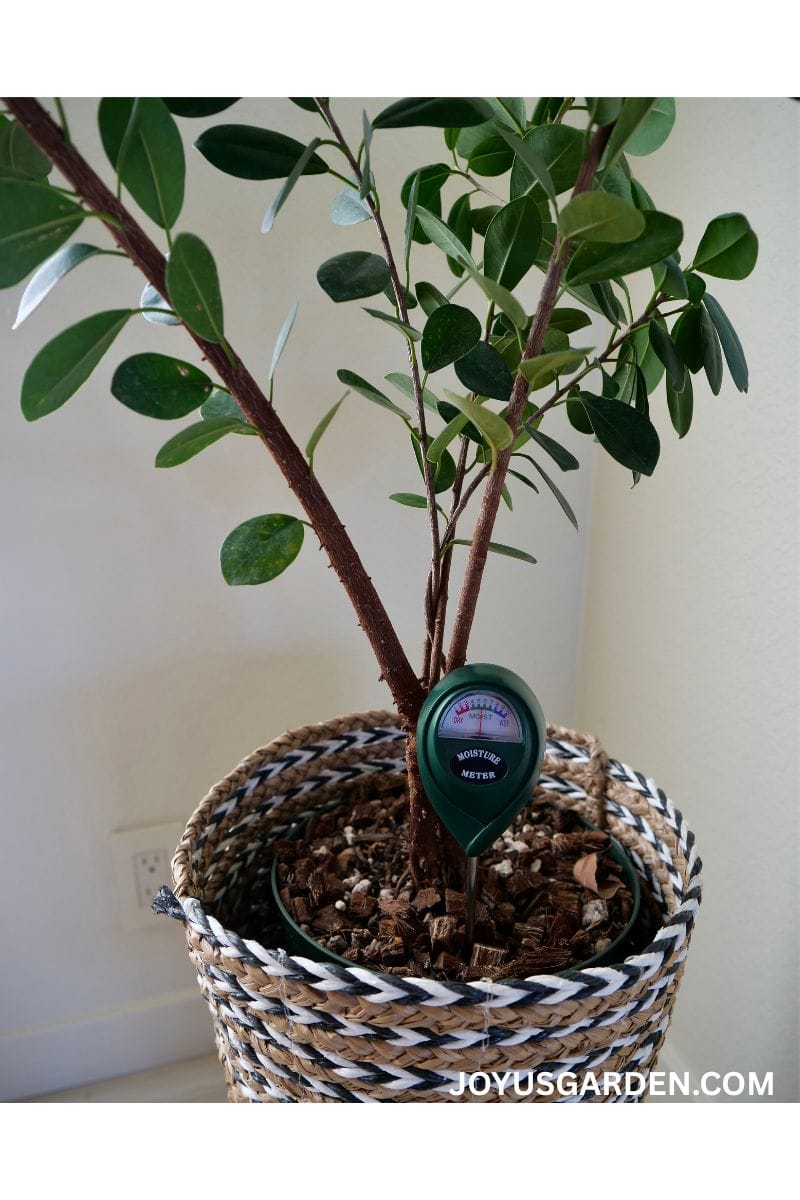
I’ve been working and playing with houseplants for many years, and a moisture meter is a tool I reach for all the time. It tells me if my plants need watering.
Even if the top of the soil feels dry, most of the roots sit halfway down the pot or deeper. My finger can only reach so far, so this little tool indicates what’s going on moisture-wise.
With a moisture meter, you can water each plant based on its needs rather than following a one-size-fits-all schedule. It takes the guesswork out of watering and helps you avoid the biggest beginner mistake—watering too much too often.
3) Fertilizer/Food
Plants, like people, need nutrition. Fresh potting soil has some to offer, but it runs out over time. A well-balanced fertilizer formulated for houseplants helps keep them growing strong.
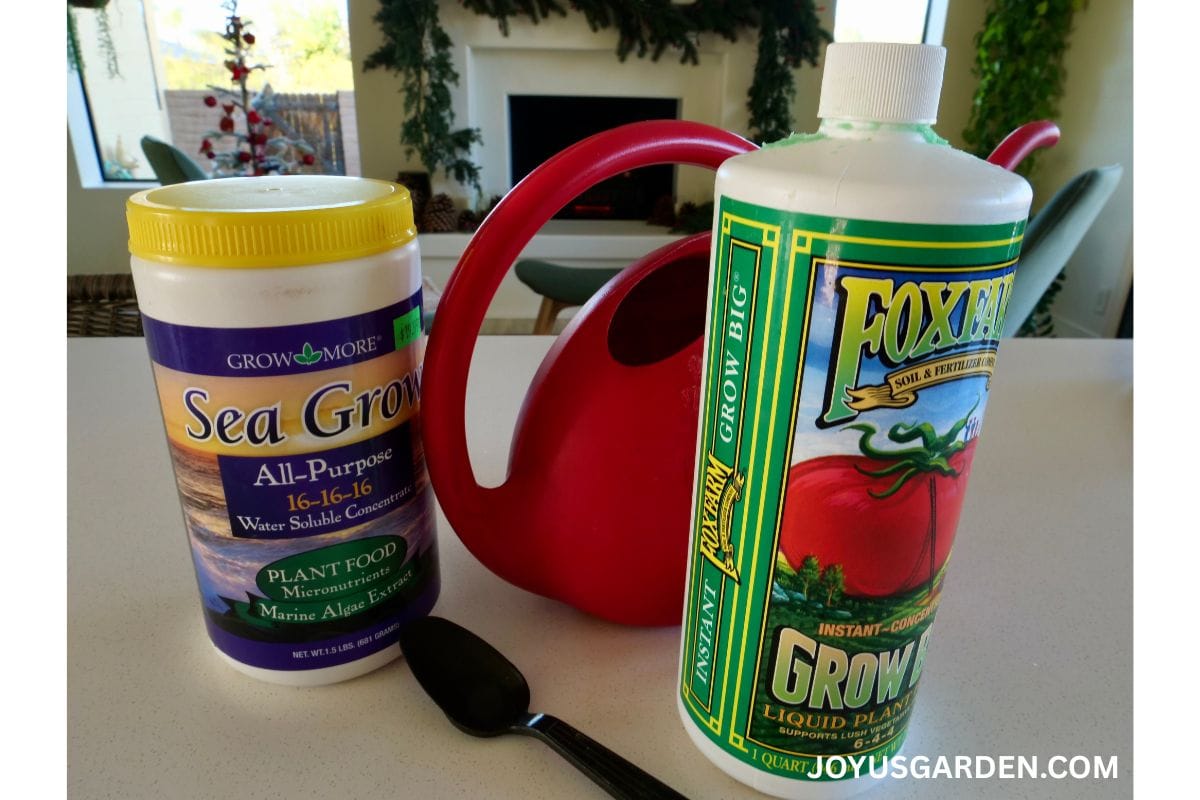
You’ve got a few choices: powdered, liquid, or slow-release granules. There’s no need to buy a big jar or bottle like the ones I use in the photo below. If you only have a couple of plants, a small bottle or jar will last you a year or two.
Feed your plants during the growing season, which is spring and summer in most places. Always follow the directions on the bottle or jar—more isn’t better, and over-fertilizing can cause damage. Too much of a good thing isn’t always a good thing!
How often you feed houseplants depends on a few things: the type of plants you have, the fertilizer you’re using, your home’s conditions, and the time of year. Once you get comfortable with your plants, you’ll find a routine that works for you and them.
More on Fertilizing and Feeding Houseplants.
4) Pruners/Snips
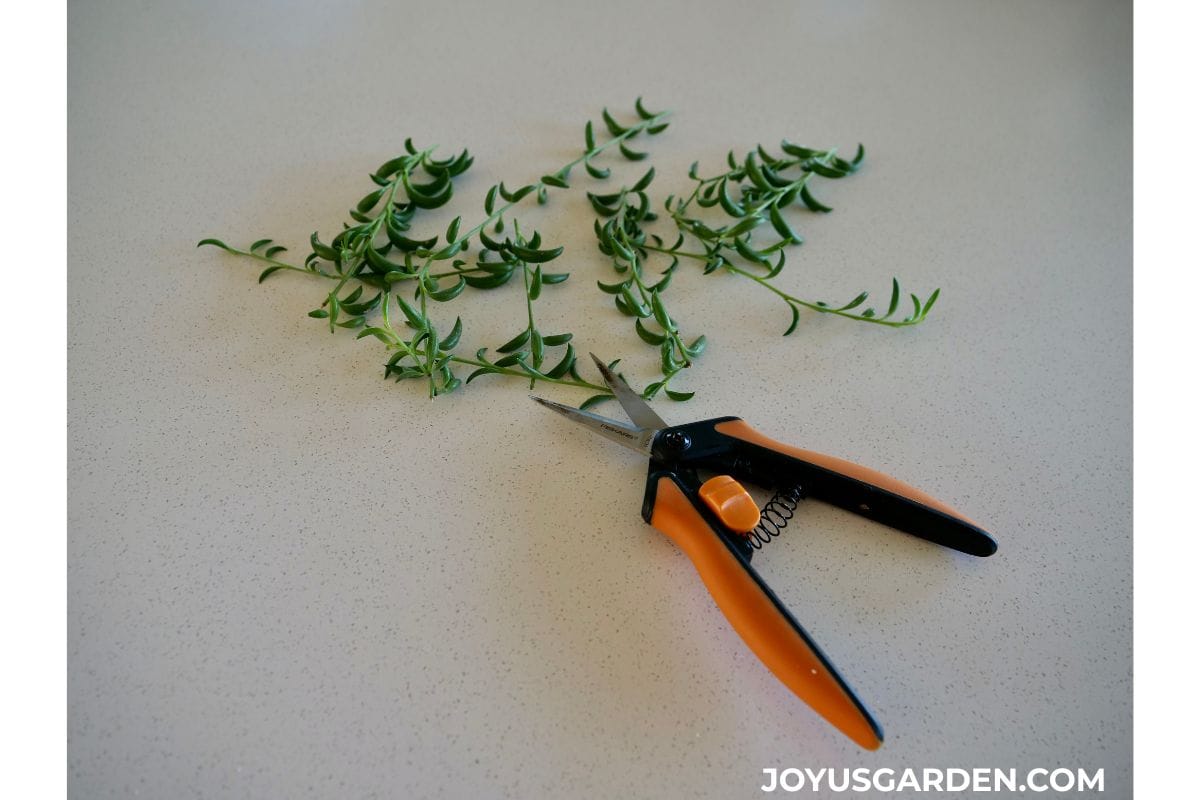
You’ll see a yellow leaf now and then—it’s just part of a plant’s normal growth cycle. I use Fiskars floral snips for most of my houseplant trimming. They make quick, precise cuts and are great for pruning and propagating.
Honestly, the snips or any houseplant shears are a good idea, but a sharp, clean pair of scissors will work too.
5) Mister
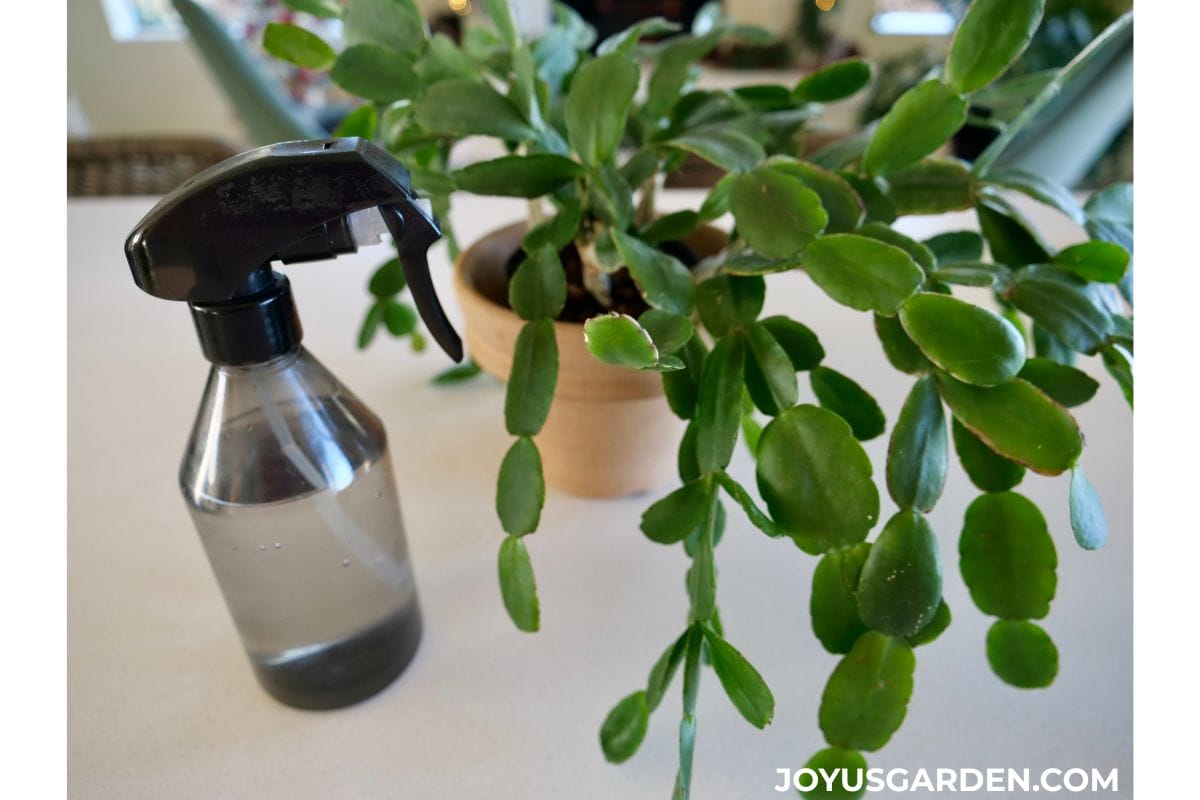
Most of the plants sold in the houseplant trade come from tropical areas, so they appreciate a bit of extra humidity. Misting doesn’t actually raise the humidity in a room, but these plants are used to regular rain in their native habitats, so it must feel good to them. It also helps keep the leaves clean, which is a plus.
A mister bottle rounds out my list of houseplant essentials for beginners because most tropical plants enjoy a light spray now and then. It’s good for air plants, bromeliads, monsteras, rubber plants, and most tropical plants – to name a few. It’s an easy way to give them a little refresh.
More Plant Care Kit Essentials to Add Later
As your plants grow and you expand your collection, you’ll want to add a few more tools to your kit as needed.
Microfiber cloth, duster.
Dust can clog the pores on your plant’s leaves, making it harder for them to breathe and photosynthesize. Any soft, damp, untreated cloth works well for cleaning plants with big leaves like monsteras, dracanenas, rubber plants, etc. A small duster is handy for plants with smaller leaves.
Humidity gauge.
I live in the Arizona desert and grow over 70 houseplants. I’ve used the same trusty humidity meter/monitor for seven years. When the humidity drops below 25-30%, I know it’s time to turn on the humidifiers near my plants.
Small humidifier.
Many houseplants originate from humid environments. While you won’t be able to replicate the tropics in your living room, any boost, like a small humidifier, will help! Dry air, common in many households, can cause plants to lose moisture through their leaves and also to develop brown leaf tips.
Natural Pest Treatment.
I use insecticidal soap or neem oil. Unfortunately, pests can still sneak into our indoor gardens. These natural pesticides are safe for use around pets and humans, and effectively control common houseplant pests like aphids, mealybugs, and spider mites.
Potting soil.
At some point down the line, your plants will need repotting. Most plants do well with a soil formulated for houseplants, but succulents, bromeliads, and orchids need special mixes.
Pots with drainage holes.
Also for repotting. Make sure to use grow pots or decorative pots with drainage holes. This allows excess water to drain out of the soil, preventing root rot and other water-related issues.
Repotting mat. Repotting a plant is messy. I repot many of my plants outdoors, but a mat keeps your surfaces clean while getting the job done. Mine folds up into a small, thin square and is very easy to store.
5 Houseplant Essentials For Beginners Video Guide
Full List Of Houseplant Essentials.
For us plant lovers, building a collection is fun. Starting with a simple houseplant starter kit makes caring for them easier and helps you grow confident as your indoor jungle grows. These basics set you up to cohabitate with lots of healthy, happy plants!
You’ll want to check out the many care and growing posts we’ve done on Houseplants.
Happy gardening,

- About the Author
- Latest Posts

Nell, the founder of Joy Us garden, was born into a gardening family and grew up in Connecticut’s countryside. After living in Boston, New York, San Francisco, & Santa Barbara, she now calls the Arizona desert home. She studied horticulture & garden design, working in the field all her life. Nell is a gardener, designer, blogger, Youtube creator, & author. She’s been gardening for a very long time & wants to share what she’s learned with you.