Indoor Cactus Plant Care: A Beginner’s Growing Guide
Cactus – you either love ’em or hate ’em. Living in the Arizona desert, I’m definitely in the love camp! I grow them in my garden and in my home, too. Over the years, I’ve learned what works (and what doesn’t) when it comes to indoor cactus plant care, and I’m sharing those tips so you can grow them successfully.
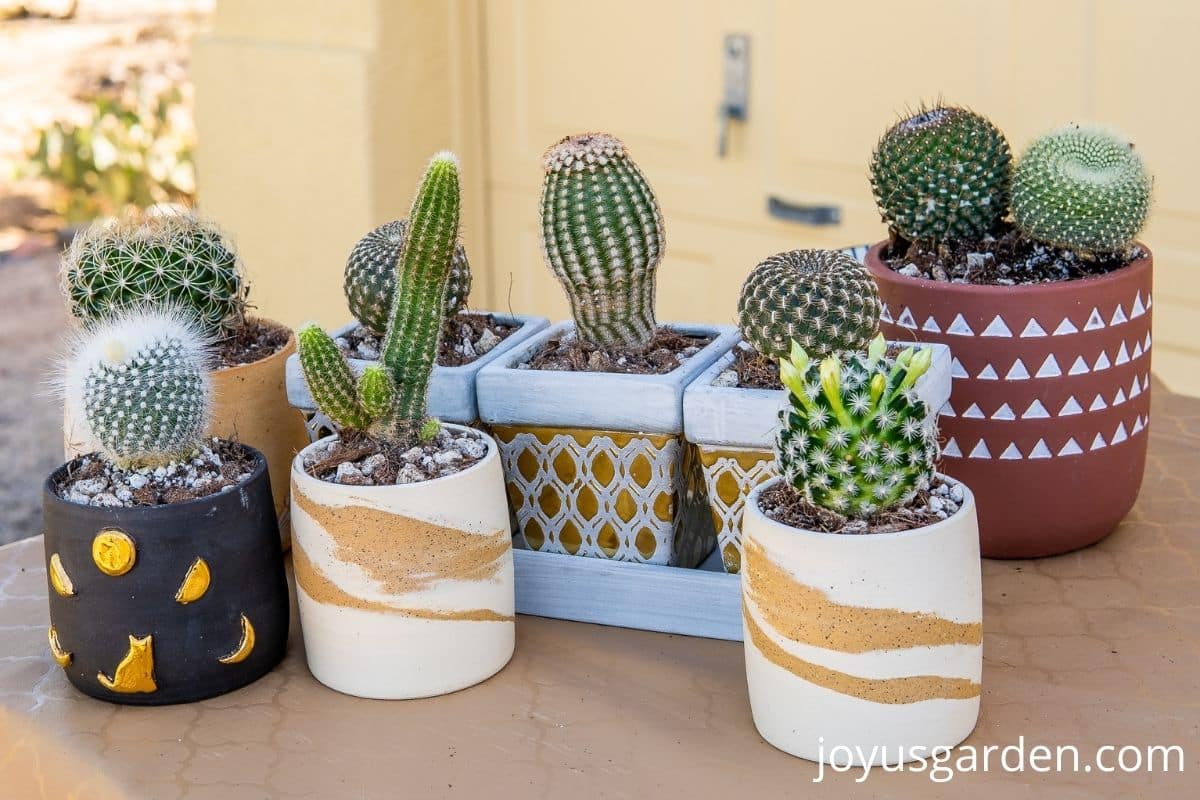
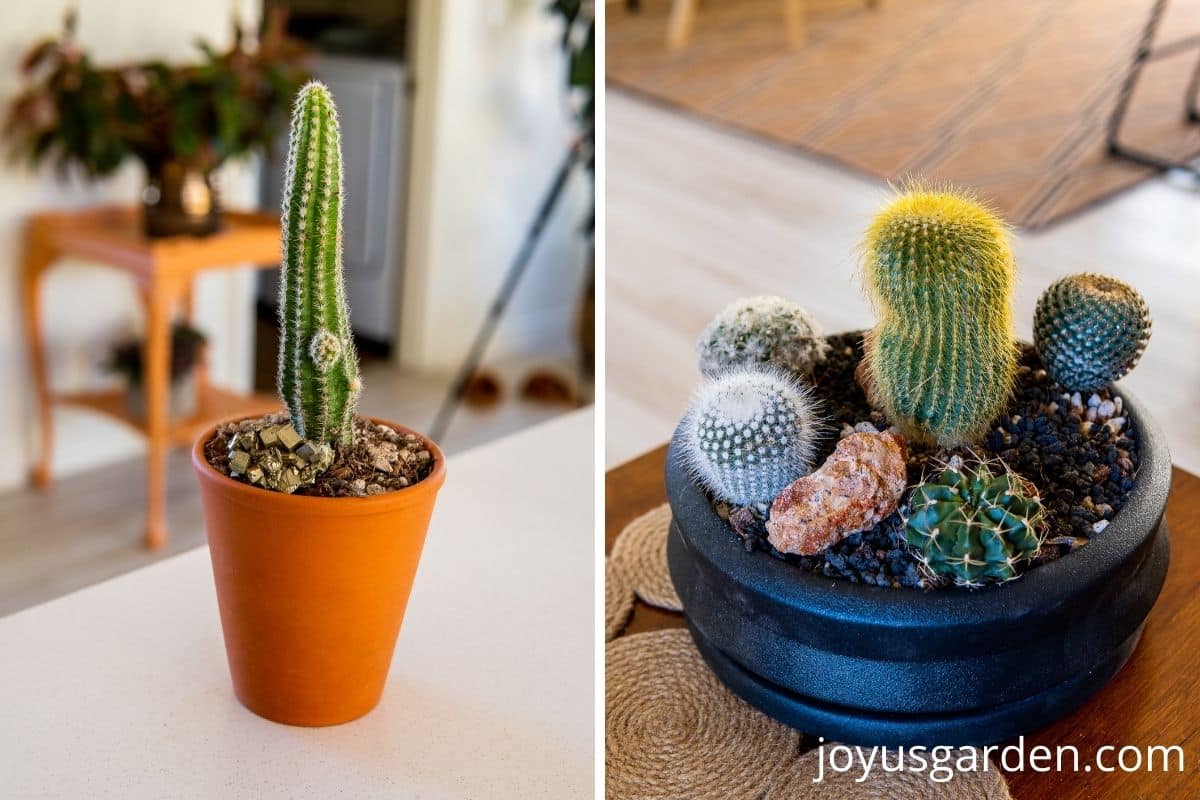
Here, I’m focusing on desert cacti, not tropical types like Christmas Cactus. Most people picture spines when they think of a cactus, and that’s true for many of them. The ones you’ll usually find for sale come in small pots, perfect for desks, shelves, and tabletops. And from what I’ve heard from local growers and nurseries, if you give them adequate light, just about any small cactus you choose should do well indoors.
Indoor Cactus Plant Care Guide
Cactus Characteristics
Growth Rate
Cacti are slow growers. So, don’t be surprised if you don’t see much (if any) growth action in a year.
Size
They vary in height and width, depending on the type of cactus. Most are grown and sold for the houseplant trade in 2″, 3″, and 4″ grow pots.
Uses
These are perfect tabletop plants, and they’re also great for combining in low bowls to create little cactus gardens. If you have kids, it’s best to keep your cacti out of reach. They’re fascinating plants, but definitely not the most user-friendly!
Indoor Cactus Care
How Much Sunlight Do Cactus Need
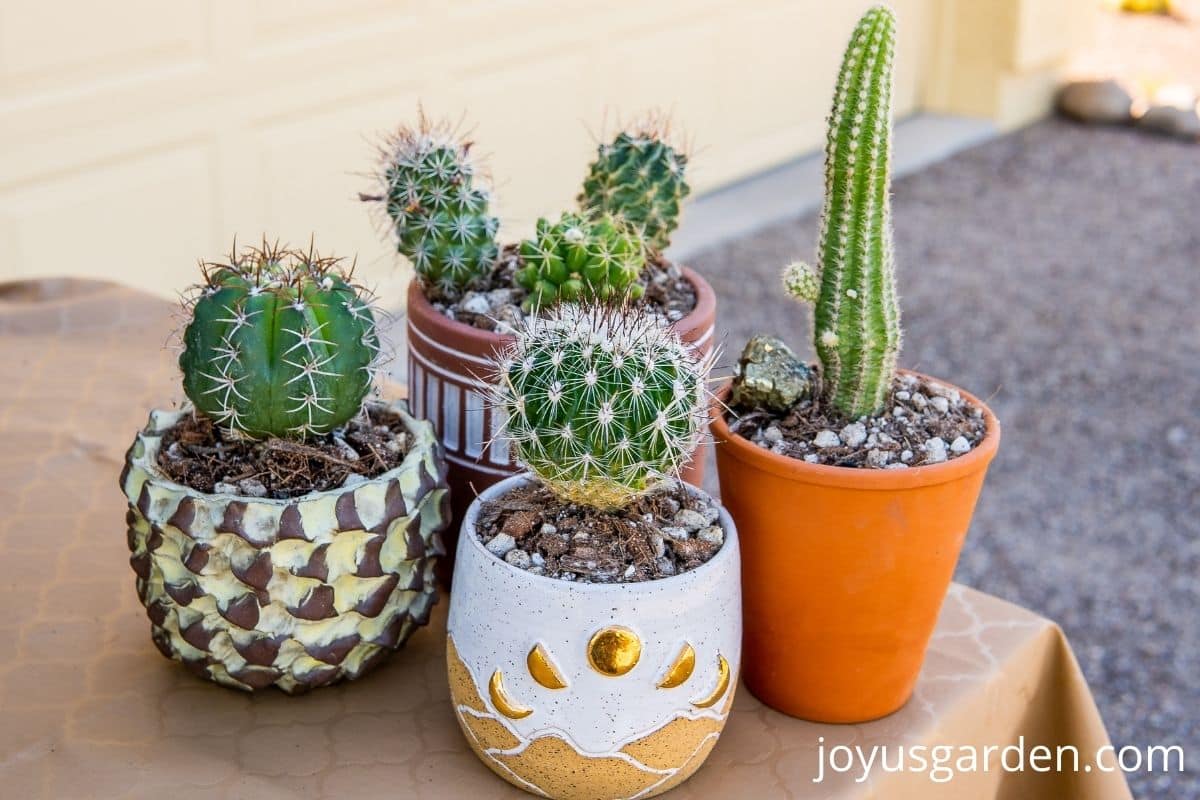
Cactus and sun go hand in hand. They aren’t low light plants! For good indoor cactus plant care, give them plenty of bright light and as much sun as you can, at least 6 hours a day is their sweet spot. These aren’t low-light plants. In fact, most cacti need more light than the fleshy succulents we all love. From what I’ve learned from local growers and nurseries, if you give them the light they need, just about any small cactus should do well indoors.
That said, they can burn in hot, direct sun, especially if they’re right up against a window with hot glass. Although most are grown in greenhouses, the glass is often whitewashed to lessen the sun’s intensity. If you’ve ever touched the hot glass, then you know what I mean!
I live in Arizona, the sunniest state in the US, and keep most of my cacti on open shelves in a very bright kitchen with lots of windows and a sliding glass door. If needed, rotate your plants every couple of months to ensure they receive light on all sides. In the darker winter months, move them to the brightest spot you have.
Related: How Much Sun Do Succulents Need, Indoor Succulent Care Basics
How Much Water Do Cactus Need
Here’s the question of the day, how often should you water a cactus indoors? You might think they can go months without water, but that’s not the case. They need very little, but not none!
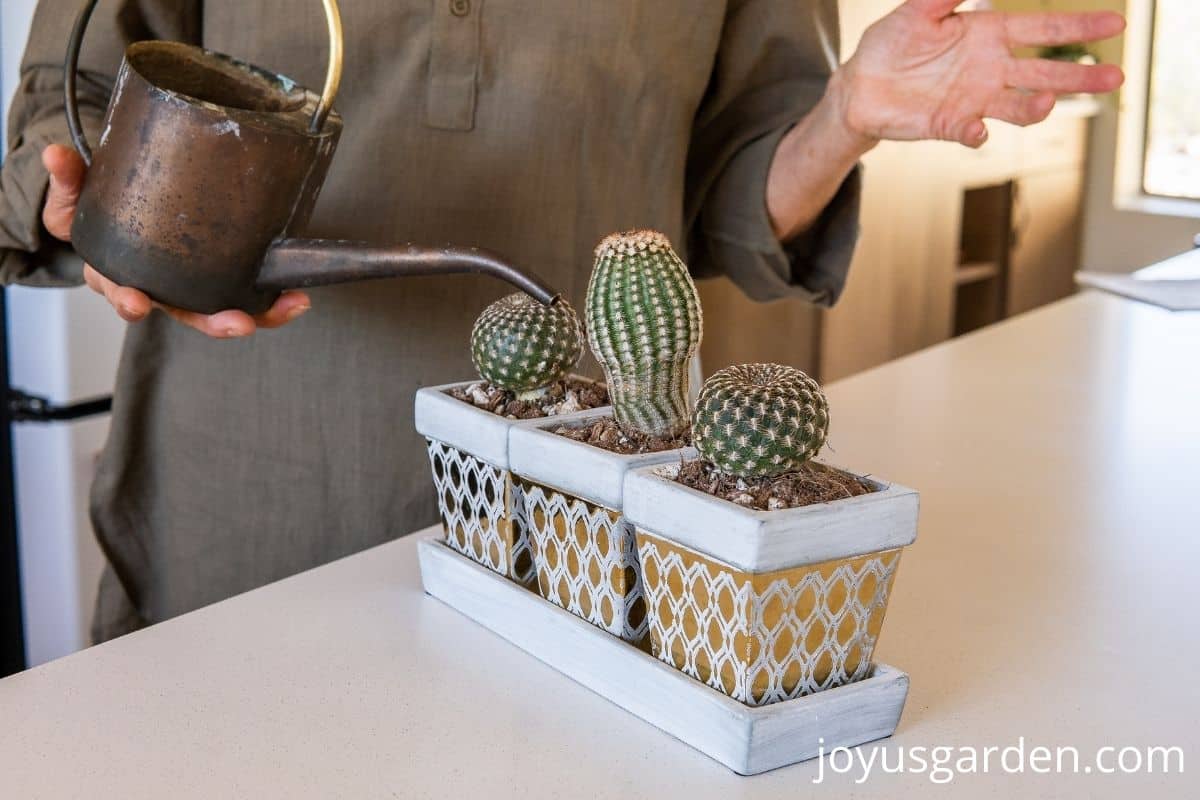
A good rule of thumb is to let them dry out completely, then water again. Make sure the pot has at least one drainage hole so excess water can flow out. Small cacti in a sunny spot and warm temps will need water more often. In my desert climate, I water mine every 2–3 weeks in summer.
Cacti in smaller pots or shallow bowls dry out faster and need more frequent watering than those in larger pots. They have shallow roots and water-storing mechanisms and are prone to root rot if watered too often. How often you water depends on your climate, home environment, pot size, soil mix composition, and the time of year.
In winter, I cut back and water less, about every 2–4 weeks from November through February. And as for misting, don’t bother. Save that for your tropical houseplants! I always use room temperature water from my tankless r/o system for all my houseplants.
Related: How Often To Water Succulents, A Guide To Watering Succulents Indoors
Temperature
They like warm conditions but prefer cooler nights during the late fall and winter months.
As I say in all care posts, if your house is comfortable for you, it’ll be so for your indoor plants as well. Keep your cacti away from cold drafts and blasts from air conditioning or heating vents.
Humidity
This is where cacti differ from most other houseplants with subtropical or tropical origins. They’re adapted to dry air, which is beneficial because most home environments are on the dry side. No need to mist or spray these babies!
In a high-humidity environment, the soil dries out more slowly, so adjust your watering frequency.
Fertilizer/Feeding
“What is the best fertilizer for cactus and succulents?” I say, not too much or too often. 2-3 times a year, during the active growing season (spring and summer, into early fall) for those growing in pots, is sufficient.
I use balanced plant food, diluted to half strength. My current favorites for cacti are Foxfarm Grow Big (6-4-4) and Maxsea All-Purpose (16-16-16). These are the two foods I use for all my other houseplants. There are specific cactus fertilizers on the market, but I have no experience with them and don’t feel the need to get a special fertilizer for a few plants.
Our growing season is long here in Tucson. I feed my cacti at the very beginning of spring, at the beginning of summer, and in early fall. In locations with a shorter growing season, once in spring and once in summer will be fine. I also use worm compost/compost blend when planting, which is a slow-release way to feed.
Repotting
Like the rest of my houseplants, I repot cacti in spring, summer, and early fall. Repotting a cactus can be painful. I have a couple of tricks I use, bubble wrap and kitchen tongs, which keep my hands from getting torn up.
I don’t repot my smaller cacti too often (maybe every 5 years or so) because they don’t need it. Unlike larger cacti that grow outdoors here in Arizona, they have small root systems. I don’t go up more than one pot size unless the root system calls for bigger.
Make sure there’s at least one drain hole in the bottom of the pot so the water can readily drain out. In the repotting post and video linked below, I’ll also be covering how to plant and maintain cacti in pots without drainage holes.
Related: Repotting Cactus: Planting Cactus In Pots, Cactus Arrangement DIY, DIY Recipe For Cactus & Succulent Mix
Soil
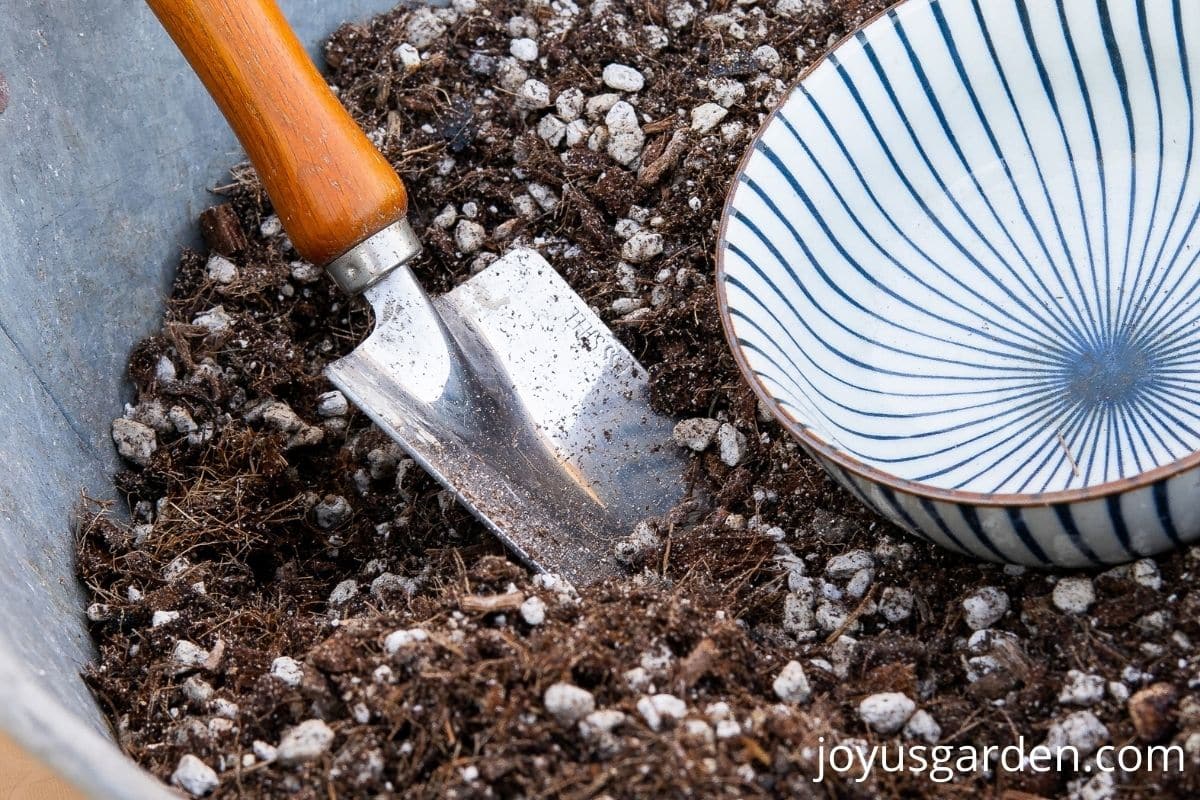
The soil mix should be light and chunky to keep it well-aerated and let water drain easily. Regular potting soil is too heavy and holds too much water, which cacti don’t need or like.
I use this diy cactus and succulent mix recipe for all my cacti and fleshy succulents. It’s a fast-draining, well-aerated soil mix. If you don’t want to make your own, here are five popular mixes that you can buy online: Bonsai Jack, Superfly Bonsai, Cactus Cult, Dr. Earth, and Tank’s.
Related: A Guide To Cactus Soil Mix, DIY Recipe For Cactus & Succulent Mix
Pruning
Good news – none is needed here! I’ve written a post on pruning succulents, but no need for a separate one, as cacti grow so slowly. This is one component that makes indoor cactus care super easy.
Propagation
I’ve propagated succulents well over a hundred times, but with cacti, it’s different. Cacti houseplants grow slowly, so it takes years for them to crowd each other out and need dividing.
Outdoors, I’ve removed offsets (babies) from one of my mammillarias to replant, and propagated pads from my Bunny Ears Opuntia and Joseph’s Coat Opuntia, as well as stems from my Montrose Apple Cactus.
The key is to let any cut pieces dry and callus over before planting—this helps prevent rot. After that, place them in a dry mix formulated for cacti and hold off on watering for 7-10 days while they settle in.
Pests
I’ve never seen any pests on my indoor cacti, but fleshy succulents are a different story!
Outdoors here in the Sonoran Desert, it’s a different situation. Common Prickly Pears can get heavy infestations of cochineal scale.
Because of that, I think there’s a small chance indoor cacti could attract mealybugs, since they’re both sap-sucking insects with similar habits. Scale is another pest to keep an eye out for.
Check your plants every few months, especially around the base and in tight spots. Catching pests early makes it easier to control them.
Pet Safety
They’re considered to be non-toxic on the ASPCA website. If your cats or dogs are eating cacti, there may be something wrong with them!
If your pet is “plant curious”, consider keeping the cactus plant out of their reach. You don’t want to deal with spines in mouths or paws.
Do Cactus Flower
Yes, they do. But it’s much more common for them to flower when grown outdoors. The majority of cacti here in the Arizona desert bloom in the spring, and a few bloom in late summer. The key to getting yours to flower indoors is lots of bright light and cool nighttime temps in the winter months. And, they’re short-lived, lasting 1-3 days.
Indoor Cactus Plant Care FAQs
Why is my cactus growing tall and skinny instead of staying compact?
It’s most likely stretching towards a light source. Plants do this when they aren’t getting enough light.
Can indoor cacti be put outdoors in summer?
Yes, indoor cacti can be put outdoors in summer—take it slowly to avoid sunburn or stress. Wait until the temps warm. Start them in a bright, shaded spot for a week or so, then gradually move them to a sunnier one.
Avoid full sun, especially in hot climates like mine—morning sun is a good place to start. I have a couple of Golden Barrel Cacti in my garden with burn marks because they were planted with the wrong side facing the strong midday sun.
Make sure the pot drains well and isn’t sitting in a saucer full of water. If you get frequent summer storms, move them to a covered spot to avoid them “mushing out”. And don’t forget to bring them back inside before temps start to drop.
Is it better to keep cacti crowded together?
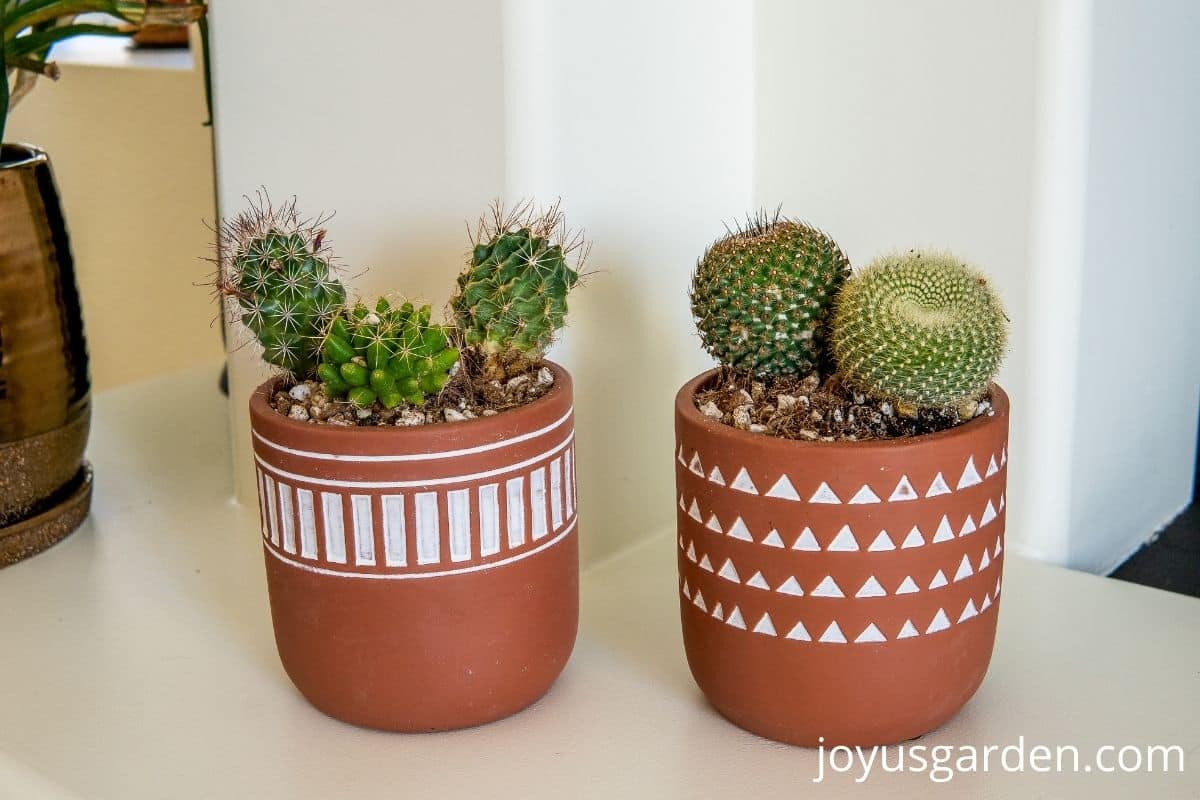
Cacti can be planted fairly close together because they grow slowly—especially indoors. I have a couple of cactus bowls I planted over seven years ago, and the spacing is still just fine.
At some point, years down the line, they may need to be divided, but that’s not something you’ll have to worry about anytime soon.
Do indoor cacti have a dormancy period?
Yes, indoor cacti do go dormant, in late fall through winter.
During this time, keep yours in bright light, reduce the watering frequency, and always let the soil dry out completely. Skip fertilizing in winter and resume in spring when the growing season begins.
Cooler temps (especially in the evening) also help encourage this rest period, which can lead to better growth and even flowering.
Indoor Cactus Plant Care Video Guide
Conclusion: 3 Essential Points
Tabletop cacti are perfect for small spaces and won’t outgrow their pots anytime soon. When it comes to indoor cactus plant care, here are the three most important things to know about growing desert cactus houseplants: they need high light (a sunny location), infrequent watering, and a light, chunky, well-aerated soil mix.
Indoor cactus care really is simple—little water, not much attention. Give one or two a try and see what I mean!
Happy gardening,

- About the Author
- Latest Posts

Nell, the founder of Joy Us garden, was born into a gardening family and grew up in Connecticut’s countryside. After living in Boston, New York, San Francisco, & Santa Barbara, she now calls the Arizona desert home. She studied horticulture & garden design, working in the field all her life. Nell is a gardener, designer, blogger, Youtube creator, & author. She’s been gardening for a very long time & wants to share what she’s learned with you.