
Pothos Plant Repotting: An Easy Step-by-Step Guide
Pothos are one of the easiest houseplants for beginning gardeners. They’re found almost everywhere, easy on the wallet, and grow fast. Due to their moderate to fast growth rate, your Pothos will need a new pot at some point. This guide covers everything you need to know about Pothos plant repotting, including when to do it, what mix to use, and the simple steps to follow.
You’ll see me repotting my Golden Pothos and Pothos N’Joy in this post and video. Other popular varieties include Jade Pothos, Glacier, Marble Queen, Neon, and Pearls & Jade. The same steps and materials apply to all types of pothos (botanical name Epipremnum aureum), no matter which one you’re repotting.
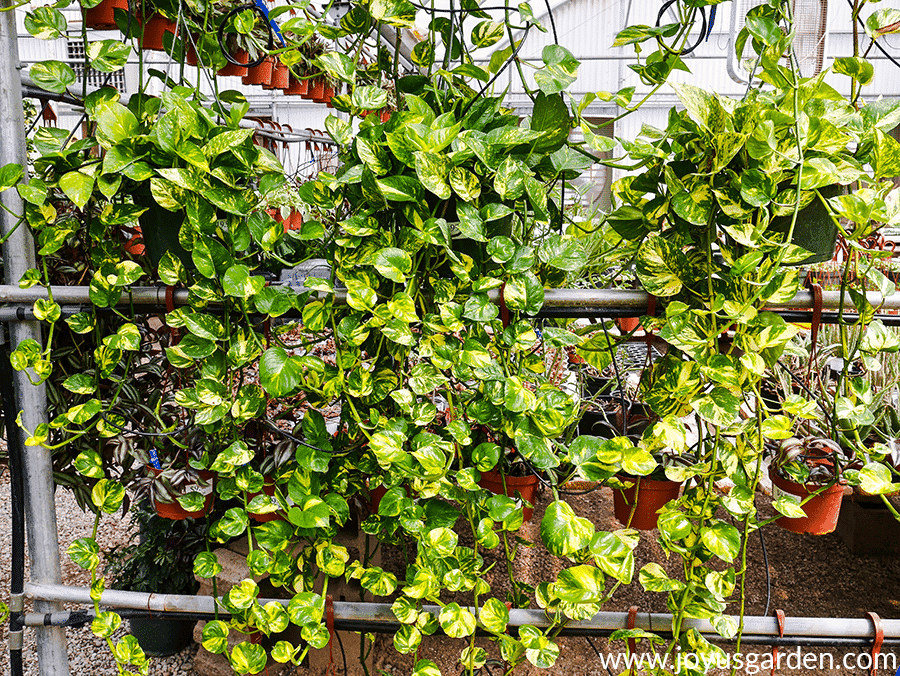
Pothos Plant Repotting Guide
Best Time for Repotting
Like most houseplants, the best time for repotting a pothos plant is during the growing season, spring and summer. If you live in a region with mild winters like I do, early fall works, too. Try to repot at least six weeks before the colder weather sets in. During the winter months, houseplants grow more slowly, and roots settle better in the warmer months.
If your Pothos has roots growing out of the bottom drainage holes or seems to be growing more slowly than usual, that’s a sign it’s ready for a new pot. I repotted the two Pothos shown below at the very end of March, just as their spring growth was starting.
How Often to Repot Pothos
Pothos plants are moderate to fast growers. Their growth slows in lower light. In their native habitats, they can climb 60′ up trees, which is why they’re considered invasive in some regions and have earned the common name “Devil’s Ivy.” Luckily, we don’t have to worry about that in our homes!
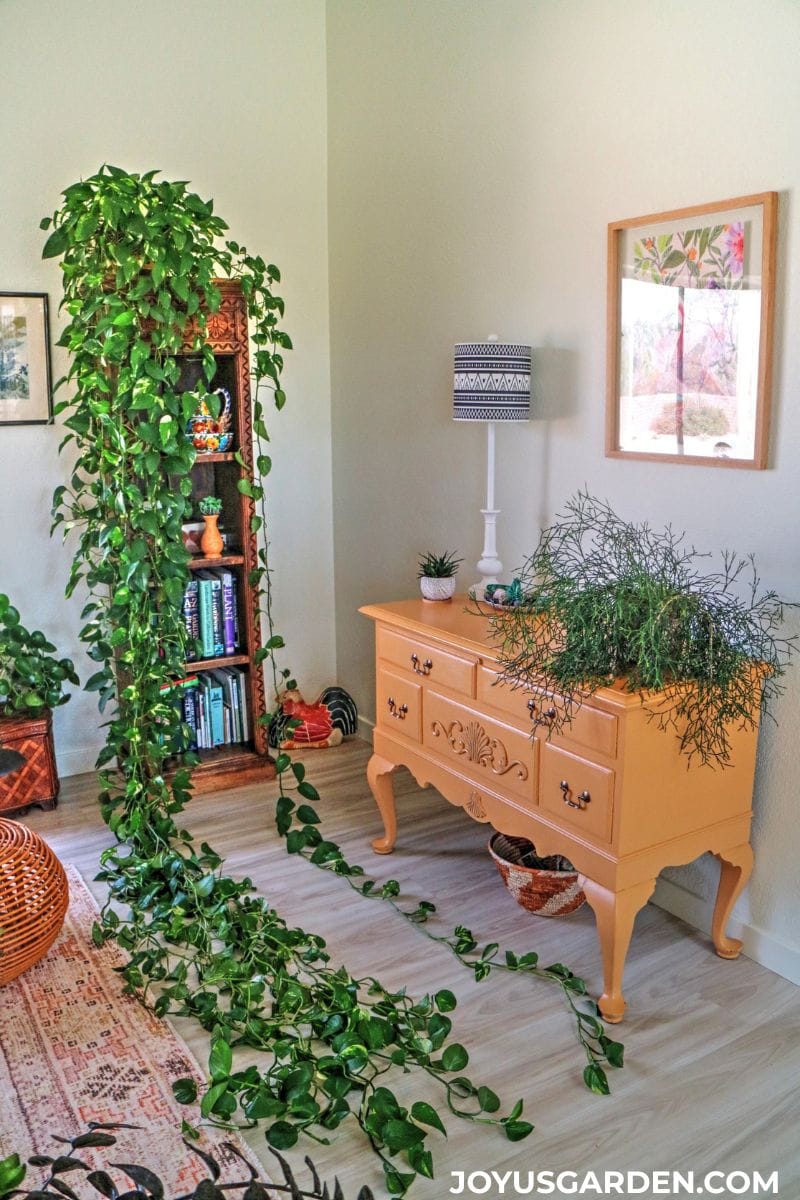
I generally repot my pothos every 3–6 years. As the trailing vines grow longer, the roots grow and expand, too. With these two pothos, I could see the roots through the drainage holes.
It’s a good idea to repot when needed, as houseplants appreciate fresh soil. If you buy a pothos and notice roots growing out of the bottom of the pot, it’s a sign to repot soon.
Pot Size Needed
I usually go up just one size from the current pot. For example, my Golden Pothos was in a 6″ grow pot, and I moved it up to an 8″. The smaller N’Joy was in a 4″ pot, and I repotted it into a 6″ grow pot.
If your 6″ Pothos is very large and extremely root-bound, you can jump to a larger pot (10″) to give the roots more room. I like to keep the pot size in scale with the plant so it doesn’t get overwhelmed or sit in too much extra soil.
Soil Mix For Pothos
Pothos aren’t fussy when it comes to potting mix, which makes the job easy. I always use a good-quality potting soil that’s well-nourished and provides adequate drainage. Potting soil doesn’t actually contain garden soil, because it’s far too heavy for houseplants. Whatever brand you buy, make sure it’s labeled for houseplants.
Here’s my blend:
Potting soil: I use Ocean Forest or Happy Frog by Fox Farm. This makes up the bulk of the mix.
Charcoal: 1–3 handfuls, depending on pot size. Charcoal improves drainage and absorbs impurities and odors.
Coco coir chips and fiber: 2–4 handfuls. The fiber is an eco-friendly alternative to peat moss, is pH-neutral, helps hold nutrients, and improves aeration. The chips provide chunkiness and aeration. Since Pothos climb trees in their native environment, I figure they’ll enjoy the airy texture these two add. This blend is the same I use for philodendrons and monsteras.
- I also added a few handfuls of compost while planting and topped the soil with about ¼” of worm compost for extra nutrients. It’s rich, so I use it sparingly, but it’s my favorite amendment.
Notes & alternatives:
The charcoal, chips, and fiber are optional, but I have 80 houseplants and keep them on hand for potting projects.
You can use all potting soil (if it’s well aerated) if you prefer, or try mixes like ½ potting soil & ½ succulent & cactus mix, or ¾ potting soil & ¼ pumice.
Steps To Repot A Pothos Plant
You can watch the video to see the whole process. But here’s a simple step-by-step of what I did:
Water a few days before repotting.
This helps reduce stress and can make the plant easier to slide out of the pot.Gently remove the plant from its pot.
Lay the pot on its side and squeeze the sides to loosen the root ball. Slide the plant out carefully.Add fresh soil to the new pot.
Add enough potting mix so the top of the root ball sits even with the rim of the new pot.Set the plant in place.
Place the plant in the center, then add the mix around the rootball. Gently press the soil in to support the root ball.Optional nutrition boost.
Finish with a thin layer of worm compost and compost on top for the extra nutrients.New to repotting or need a refresher? This repotting guide walks you through the basics.

Other Pothos Guides
Pothos Care: the Easiest Trailing Houseplant
How To Grow Lush Pothos With Long Trails
Answering Your Questions About Pothos Care

My Trick for Pothos with Long Trails
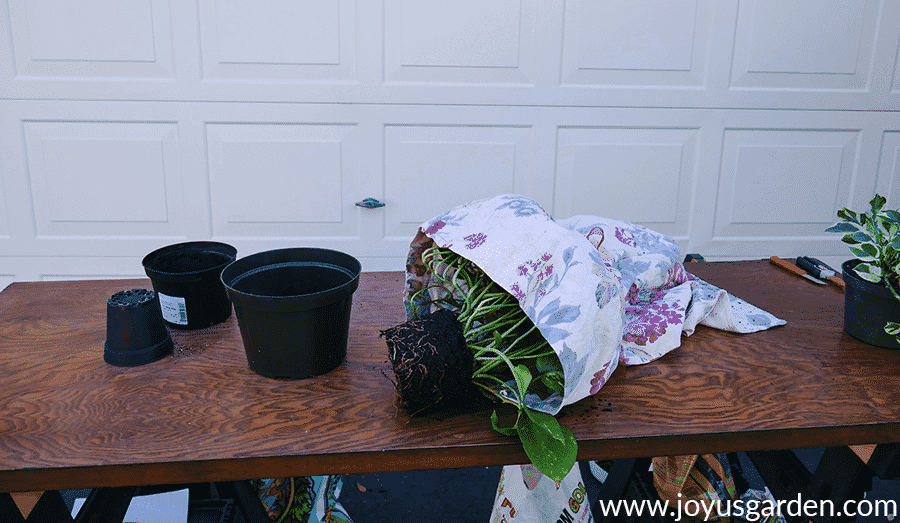
We all love the lush growth and long, beautiful pothos trails — until they’re flopping everywhere, getting in the way of your repotting mission! My Golden Pothos has 7-foot trails, so here’s what I do: I gently gather them into a large pillowcase and loosely tie it near the top. You’ll see me do this toward the end of the video.
This keeps the trails neat and lets you move them side to side while you add fresh mix to the pot. When you’re done, untie and let them spill back out – you shouldn’t have any broken leaves or stems. I also use this trick when I’m working with hanging succulents as their leaves can fall off easily.
And here’s a bonus: not only are Pothos easy to maintain, but they’re simple to propagate. Those long trails grow fast, with little roots forming at each leaf node. I like to root my cuttings in water, then plant them into the soil mix once the roots are 1–2 inches long.
After Care
Place your pothos back in bright, indirect light. I water right after repotting, and sometimes it takes a couple of soakings if the mix is dry. Resume your usual care after that. If you see a little wilting or drooping at first, don’t worry — your plant is just settling in.
Video Guide
Pothos Plant Repotting FAQs
How does the choice of pot material (terracotta vs plastic vs ceramic) impact pothos health after repotting?
No, I haven’t found this to be true. What is best for the health is a good, suitable potting mix, pots with at least one drain hole, adequate light, and good care.
Can repotting a Pothos too often actually stress the plant and slow growth?
Probably, even though they grow fast, they don’t need repotting yearly.
Do Pothos plants prefer to be slightly root-bound, and if so, how tight is too tight?
Yes, Pothos plants do fine being a little root-bound. But if the root growth starts circling the bottom of the pot tightly or you see it pushing out of the drain holes, it’s time to repot. A plant that’s too root-bound may look stressed (droopy) or stop growing.
Can you repot a Pothos without disturbing its roots at all, and how does that affect growth?
You could, but I always like to gently loosen or massage the roots a bit, especially if the plant is pot-bound. This helps the roots spread out into the fresh soil mix instead of staying in their tight shape. I’ve found it gives them a little jump start to grow and settle into their new pot.
Conclusion: Pothos are easy to care for and easy to find, making them one of the most popular houseplants. With the right care—including Pothos plant repotting—they can live for decades, helping you maintain the health of your plant. Proper care and timely repotting are all it takes to enjoy a lush, thriving plant for years to come.
Happy gardening,

- About the Author
- Latest Posts

Nell, the founder of Joy Us garden, was born into a gardening family and grew up in Connecticut’s countryside. After living in Boston, New York, San Francisco, & Santa Barbara, she now calls the Arizona desert home. She studied horticulture & garden design, working in the field all her life. Nell is a gardener, designer, blogger, Youtube creator, & author. She’s been gardening for a very long time & wants to share what she’s learned with you.
I repotted mine and it’s turning yellow. I had this plant for 2year it was from my dad funeral and the last thing I want it to do is die cause that’s all I have of him. Can you please help me
Hi Keshia – It’s hard to say. Pothos are tough & the most common cause of yellowing leaves is too much or too little water. Nell