
Fertilizing Camellias: When & How To Feed Camellia Bushes
I’m sharing what I know about fertilizing camellias, with great success, and bringing them back to health. Feeding makes such a difference in the overall health of your plants. In most cases, just one to three rounds of proper fertilization and care did the trick.
Oh, Camellias, your showy flowers and lush evergreen foliage captivate us! I was a garden designer and professional gardener in the San Francisco Bay Area for many years, where these beauties are extremely popular. I took over many accounts with chlorotic, tired, and sickly-looking shrubs, but with the right feeding routine, they bounced back.
Growing Zones: The majority are suited for growing in USDA zones 7-10.
Most Common Types Of Camellias: Camellia japonica, Camellia sasanqua
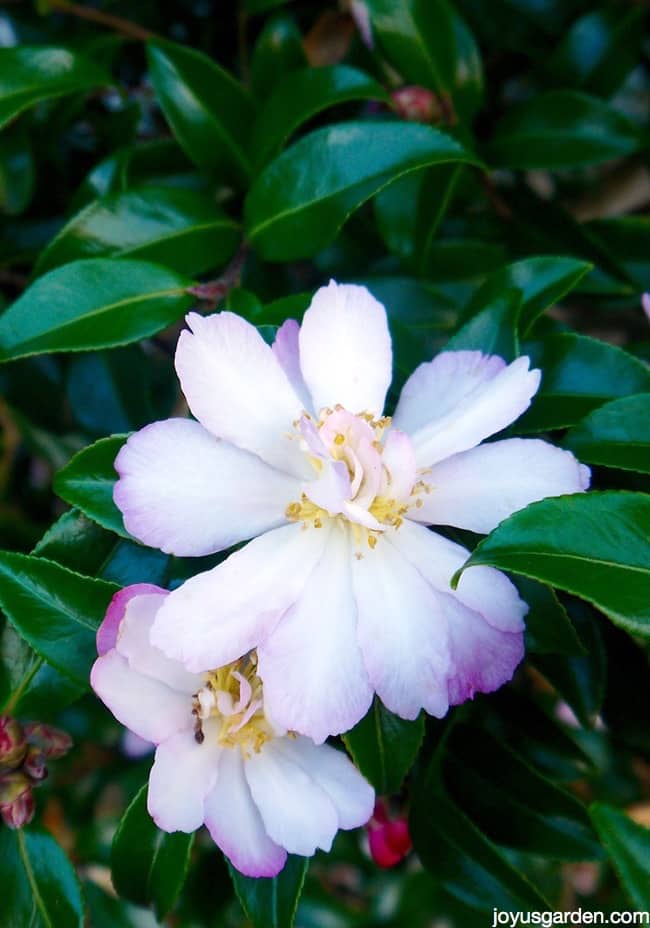
A Guide To Feeding & Fertilizing Camellias
Why Camellias Need Feeding
Camellias are prone to chlorosis, which causes yellowing leaves, due to several potential issues. This often happens in areas with heavy or alkaline soil (measured by pH). Both can make it hard for the plant to take up nitrogen, leading to nutrient deficiency and pale, tired-looking foliage.
Camellias prefer their soil to be well-drained and slightly acidic, rich with humus and organic material. The right soil ph helps the roots absorb nutrients and stay healthy. When the soil conditions are off, even good fertilizing won’t make much difference, so it all starts with the soil. If you’re unsure about your soil’s nutrient levels or pH, consider a soil test before fertilizing, it’ll tell you what your camellia needs.
They are long-lived shrubs, but even tough plants need a little help to stay strong and keep blooming as nutrients in the soil slowly are washed away by rain or regular watering. Feeding camellias replaces what’s lost or lacking, and keeps them growing healthy, producing glossy leaves and plenty of buds.
In addition, camellias are subject to plant diseases and pests, so feeding makes them stronger and better able to resist stress and recover from damage.
Signs A Camellia Needs Fertilizer
A healthy camellia has glossy foliage, a full form, sturdy new growth, and plenty of buds when about to flower. When nutrients run low, you might see pale or yellowing leaves, weak stems, fewer flowers, flower drop, or buds dropping before they open. With the right feeding schedule, your camellia will bounce back.
When Should You Feed Camellias?
The best time to feed camellia plants is right after they finish flowering, typically late winter or early spring, depending on your climate zone and the season’s weather. Flowering requires significant energy, and feeding helps the plant replenish and produce healthy new growth.
My experience with camellias was in the San Francisco Bay Area, USDA zones 10a and 10b. In many cases, I found that one round of application was necessary. Still, in some cases, the shrubs required another application in mid-summer (no later than the end of July) and then another one after the final bloom cycle. Three applications did the trick!
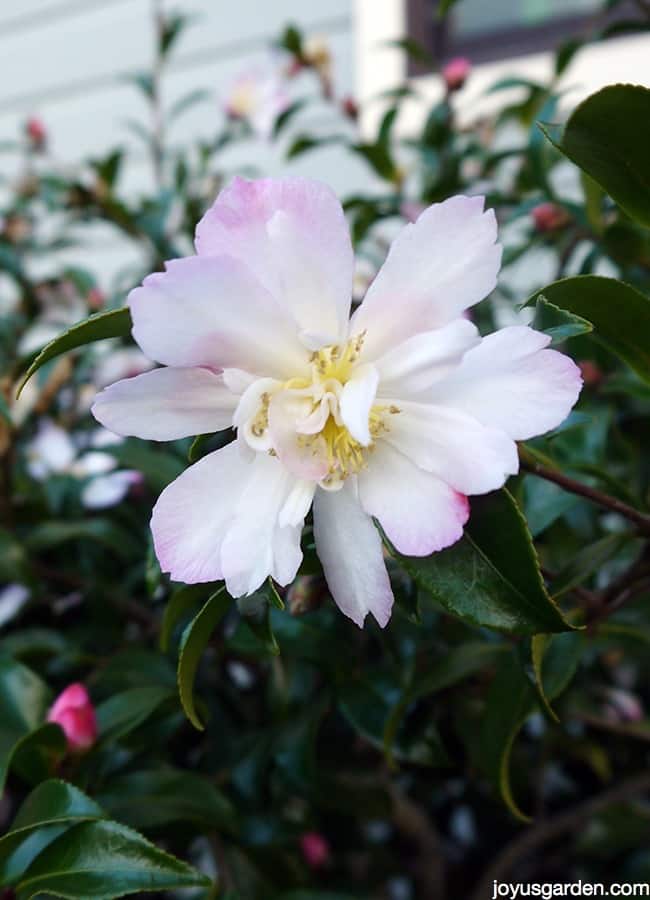
This is how you want camellia foliage to be – dark, glossy green.
Fertilizers & Amendments To Use
These acid-loving plants require a specific type of fertilizer; a general rose and flower fertilizer won’t work. Use one labeled as azalea, camellia, and rhododendron fertilizer – they all like the same acidic soil conditions. Holly-tone is another popular option.
I worked at a nursery in Berkeley, CA, part-time over 25 years ago. One day in the lunchroom, I stumbled upon Nuccio’s Nurseries newsletter. They recommended feeding camellias with cottonseed meal. Nuccio’s had been regarded as the top grower of camellias in the US since 1935, so I took note – and that afternoon bought a box to try on some of my clients’ plants.
I prefer and use organic fertilizers. Cottonseed meal is a slow-release option that provides steady feeding over time. Chemical and liquid fertilizers act faster but don’t last as long. The brand I used most often is Dr. Earth, followed by Down To Earth and EB Stone. They provide a good source of organic nitrogen.
There are a few types of fertilizing methods available: granular, powder, and liquid; each has its advantages. Granular fertilizers release nutrients slowly over time, powders can be mixed into water or soil for even feeding, and liquids work fastest to give plants an immediate boost. Your local nursery is a great resource, or you can do a quick internet search for “camellia fertilizers” to explore options.
Whatever you choose, follow the instructions on the fertilizer label. A large shrub will require more than a smaller one, and too much fertilizer can cause burnt-looking leaf edges (along with other signs), which stresses the plant rather than helping it.
In addition to fertilizers, I’ve found that applying a 2–3″ layer of local compost in late winter is a nice addition. It not only adds nutrients slowly over the season but also improves soil structure, moisture retention, and microbial activity. A good compost layer is a gentle, all-around boost, feeding the roots while helping the soil stay healthy and balanced — especially for camellias, which thrive in rich, humusy soil.
Tips for Applying Fertilizer
Camellias love well-drained soil. Make sure the soil is moist before feeding, as you never want to fertilize a dry plant.
For granular or powder fertilizers, dig a shallow trench around the perimeter of the plant, about one-quarter of the way in from the drip line (the outer edge of the plant’s foliage). Make it about 2–3 inches deep so the nutrients can easily reach the roots. Spread the fertilizer evenly and cover the trench.
For large, mature camellias (8’+), you can dig a second trench closer in, if possible — about 15-20 inches in from the 1st trench. Keep a distance of at least 2′ away from the trunk itself. Spread the fertilizer evenly in the trenches and cover it back up.
After applying, water it in well. It’s the irrigation, hand watering, or the rain that carries the nutrients into the root zone, making the feeding effective. Regular, even feeding is always better than one heavy application.
The amount you use depends on the size of your plant – follow the instructions on the package and be mindful not to use more than the recommended amount. If you’d like, top the soil with a layer of compost rich in organic matter, such as leaf mold, to add even more goodness.
I have never used a liquid fertilizer on a camellia. If you do, be sure to follow the instructions on the bottle.
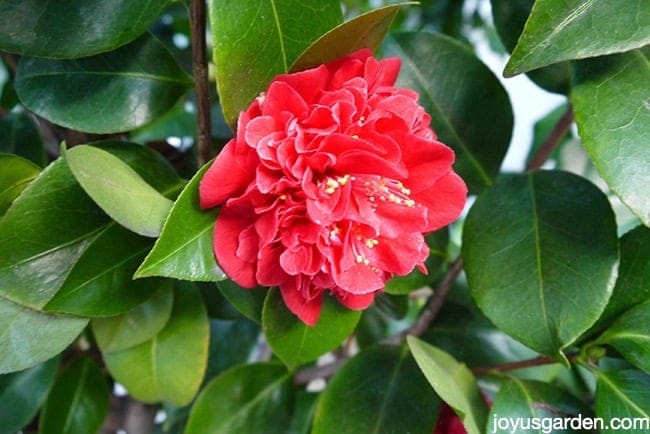
Camellias In Pots
I used cottonseed meal and compost for camellias growing in containers, but any fertilizer labeled for azaleas, rhododendrons, and camellias also works. Most fertilizer directions are based on the size of the plant, so follow those carefully.
Fertilizing Camellias FAQs
Can fertilizing too late cause my camellia not to bloom?
Yes. Camellia flowers are sensitive to cold temperatures, and fertilizing too late in the season causes new growth to form first instead of buds. This late growth uses energy that’s required for flowering and may cause buds to form late, dropping before they open.
Can I use coffee grounds to feed my camellia?
Yes and no. Coffee grounds can be beneficial in small amounts, but I wouldn’t apply them directly to the soil regularly — too much can alter the soil ph and make it too acidic. If you compost, it’s better to mix the grounds into your compost pile and use that rich compost around your camellia instead.
Is foliar feeding good for camellias?
Yes, it can be if the plants appear to need it. Foliar feeding works fast and tends to be a quick fix, so repeat applications of liquid fertilizer may be necessary for lasting results. Camellias benefit most from soil feeding, which supports long-term health and stronger root growth.
Do camellias benefit from worm compost?
Yes! I use worm compost on all my plants for an extra boost. It promotes well-aerated and fertile soil that supports strong root growth. Every amendment improves the soil in some way – depending on the type of plant and its specific needs.
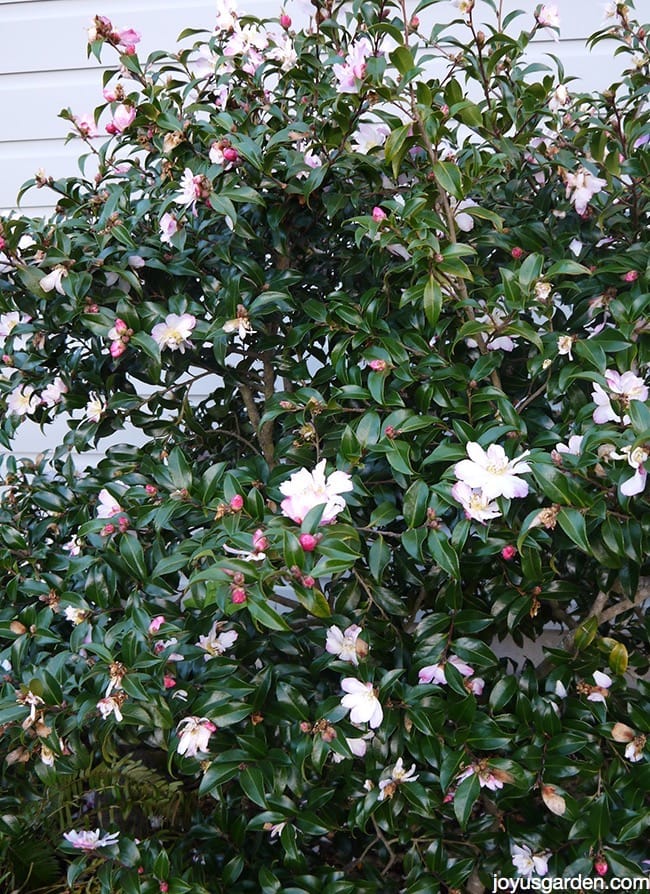
Fertilizing Camellias Recap
Feed after flowering, usually in late winter or early spring. A couple more rounds may be needed that year, depending on the health of the plant.
Use fertilizers formulated for azaleas, camellias, or rhododendrons. Cottonseed meal works great, too.
Follow the package directions — don’t apply more than the recommended amount or apply off schedule.
Water well after applying to get nutrients to the roots.
Add a 2–3 inch layer of compost for slow, natural feeding. Optional, but an extra nutrient boost!
Container camellias need less — watch for signs of overfertilization.
Observe your plant and adjust feeding based on leaf color and growth.
In most cases, I found that once a camellia was healthy, looking good, and producing blooms (usually within a year), no further fertilization was needed. Applying compost every other year is beneficial to keep the soil rich and the plant healthy and happy.
Video Guide
Conclusion: Camellias are popular landscape plants worldwide. Like any plant, they grow best in the right climate zone and soil with the proper ph level (the measure of acidity and alkalinity).
Your camellias may not always need extra feeding, but if they start to look a little tired, a mix of cottonseed meal and compost rich in organic matter can make them as happy as can be. When it comes to keeping these beautiful shrubs healthy, looking good, and blooming, using the right camellia fertilizer at the right time is always a good idea.
If you also grow roses, this is how I feed them organically and naturally.
Happy gardening,

- About the Author
- Latest Posts

Nell, the founder of Joy Us garden, was born into a gardening family and grew up in Connecticut’s countryside. After living in Boston, New York, San Francisco, & Santa Barbara, she now calls the Arizona desert home. She studied horticulture & garden design, working in the field all her life. Nell is a gardener, designer, blogger, Youtube creator, & author. She’s been gardening for a very long time & wants to share what she’s learned with you.
Thank you for this information!
You’re very welcome! Cottonseed Meal always did the trick for me. Nell
I am going to buy some cotton seed meal. My camelia is not blooming.
Elaine – There could be other issues going on with your camellia as to why it’s not blooming. The cottonseed meal will definitely make it stronger & healthier. Nell
What are some reasons my camellia will not bloom? It’s probably 25 yrs old and has never bloomed.
It is loaded with buds but they just fall off. It’s probably 12-15 ft tall. I live in zone 8.
Thanks
Hi Judy – Buds falling off is usually due to temps; too cold or too hot. It can also be lacking nutrients so if you think it’s temperature, then try feeding it 2 times a year. Nell